

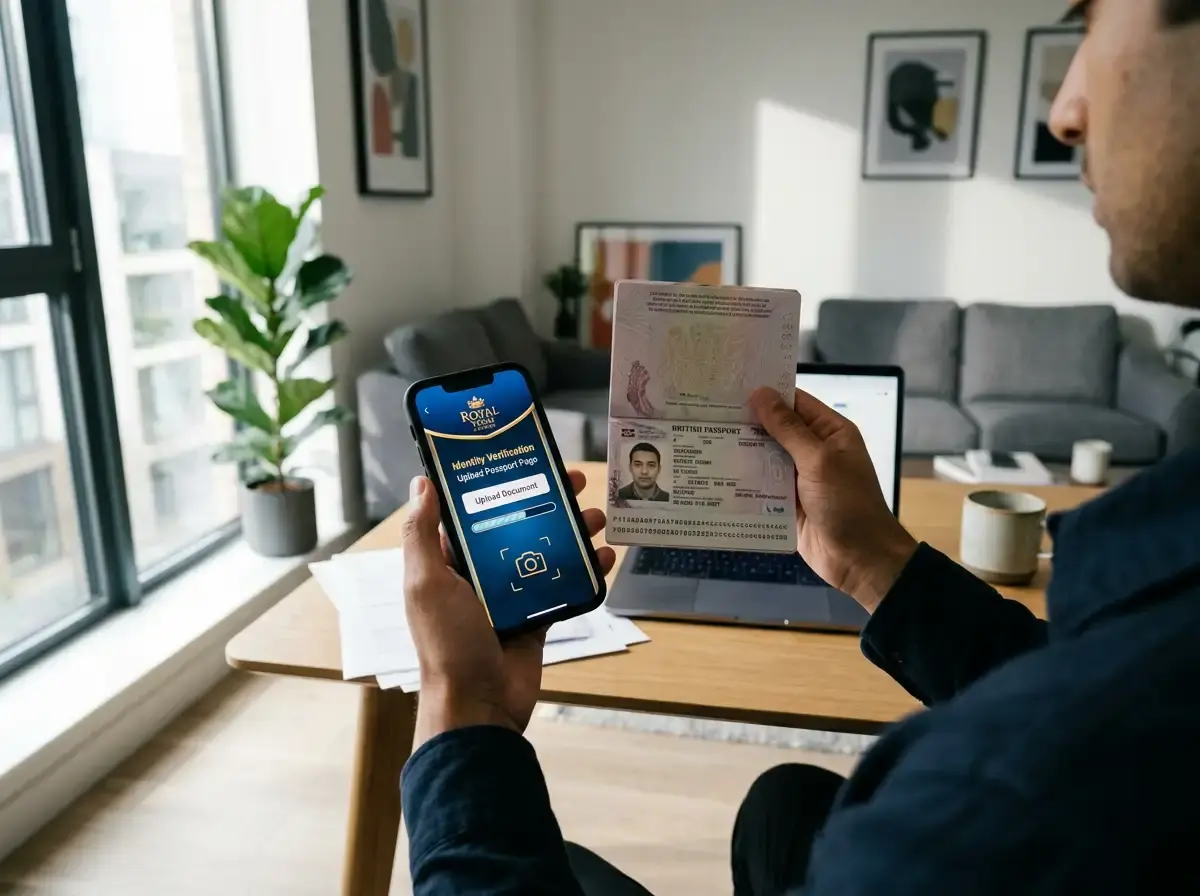
My first withdrawal attempt at an offshore casino took eleven days. Not because the casino was slow — because I had uploaded a blurry photo of my licence, my proof-of-address letter was more than three months old, and the name on my PayID did not exactly match my account registration. I had used a shortened first name when signing up. Three resubmissions later, I finally passed KYC and received my payout. Every verification headache I have encountered since then has been some variation of that same lesson: the documents need to be right the first time, or you wait.
Know Your Customer verification is not optional at any casino operating under a legitimate licence. It is a legal obligation rooted in anti-money-laundering frameworks, and it applies whether you deposited via PayID, card, crypto, or carrier pigeon. What changes with PayID is how the verification process interacts with your banking identity — and in some cases, that interaction actually simplifies things.
Why Casinos Require Identity Verification
Three years ago I spoke with a compliance officer at a Curacao-licensed operation who told me that roughly 8% of new accounts failed their initial KYC submission. Not because the players were doing anything wrong, but because the document requirements were poorly communicated and the upload interface was confusing. That 8% failure rate represented real people stuck in limbo, unable to withdraw money they had already won.

The legal backbone is straightforward. Australia’s AML/CTF Act requires reporting entities to verify customer identity before processing transactions above certain thresholds. Offshore casinos licensed in Malta, Curacao, or Gibraltar operate under their own jurisdictions’ AML rules, which broadly mirror the same principles: know who your customer is, verify that identity against documents, and report suspicious activity. Updated AML/CTF amendments passed in late 2025 raised corporate penalties to AUD 2.2 million per violation, with potential licence revocation for systemic non-compliance.
For the player, this translates into a document submission process that typically happens at one of two points: immediately after registration, or at the first withdrawal request. Most offshore casinos use the second approach — letting you deposit and play freely, then gating withdrawals behind KYC. This design maximises sign-up conversion while still meeting compliance obligations before any money leaves the platform. The catch is that players often discover the requirements only when they are trying to cash out a win, which is the worst possible moment to learn your documents are not in order.
KYC also serves as a fraud filter. Identity verification cross-references your submitted documents against your deposit history, catching instances where a stolen PayID or compromised bank account was used to fund the casino balance. It is a protective mechanism, even if it feels like a bureaucratic obstacle when you are waiting for your payout.
Required Documents: IDs, Proof of Address, and Source of Funds
I keep a dedicated folder on my phone with high-resolution photos of every document a casino might ask for. This one habit has cut my KYC turnaround from days to hours. The typical verification stack at an offshore PayID casino involves three tiers, and not every casino requires all three upfront.
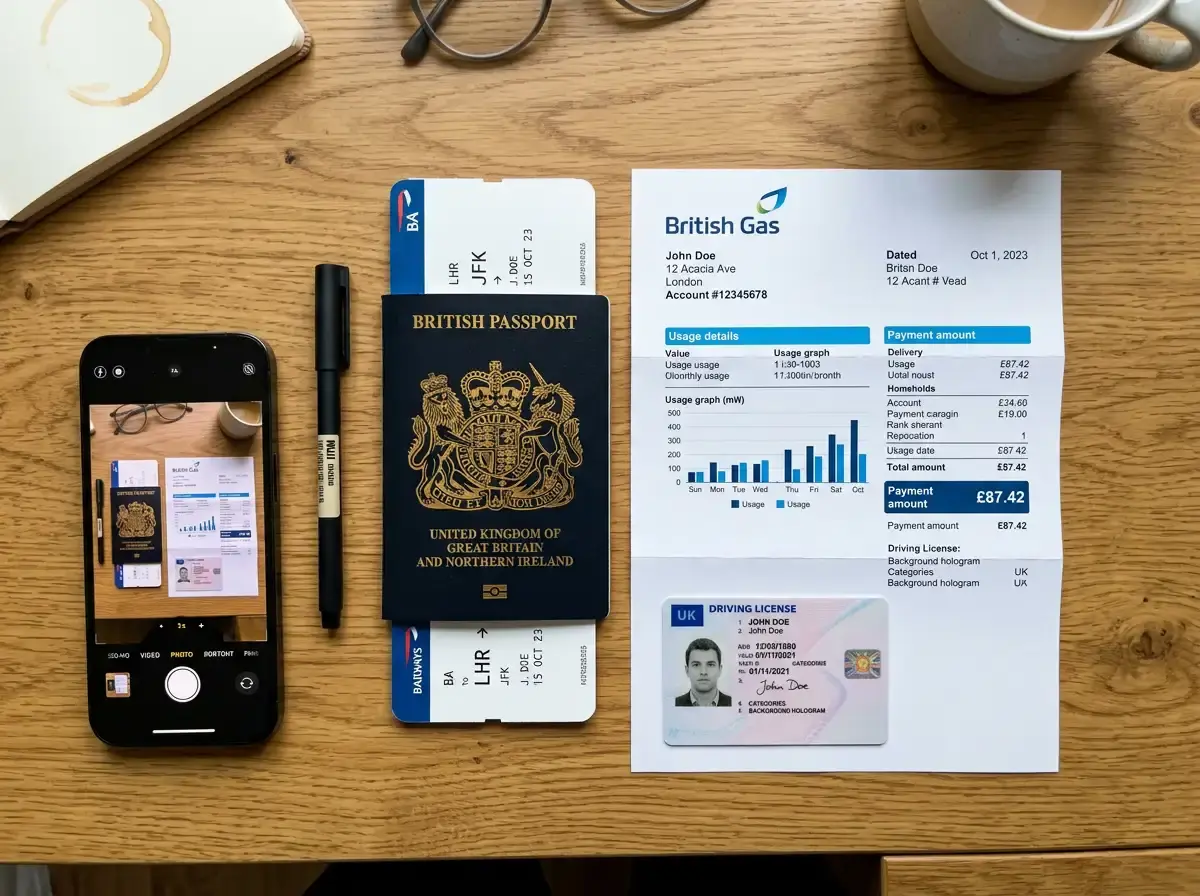
The first tier is government-issued photo ID. An Australian driver’s licence or passport works at every casino I have encountered. The document must be current — not expired — and the photo must be legible. Some casinos also accept state-issued proof-of-age cards. International driving permits are usually rejected. The name on this document must match your casino account name exactly, including middle names or initials if you included them during registration.
The second tier is proof of address. A utility bill, bank statement, or government letter dated within the last three months, showing your full name and residential address. Council rate notices work well for this. Mobile phone bills are accepted by some casinos but rejected by others — the inconsistency is frustrating, so I default to a bank statement, which has never been refused. The address must match what you provided during registration. If you have moved since signing up, update your casino profile before submitting KYC documents, or you will trigger a mismatch flag.
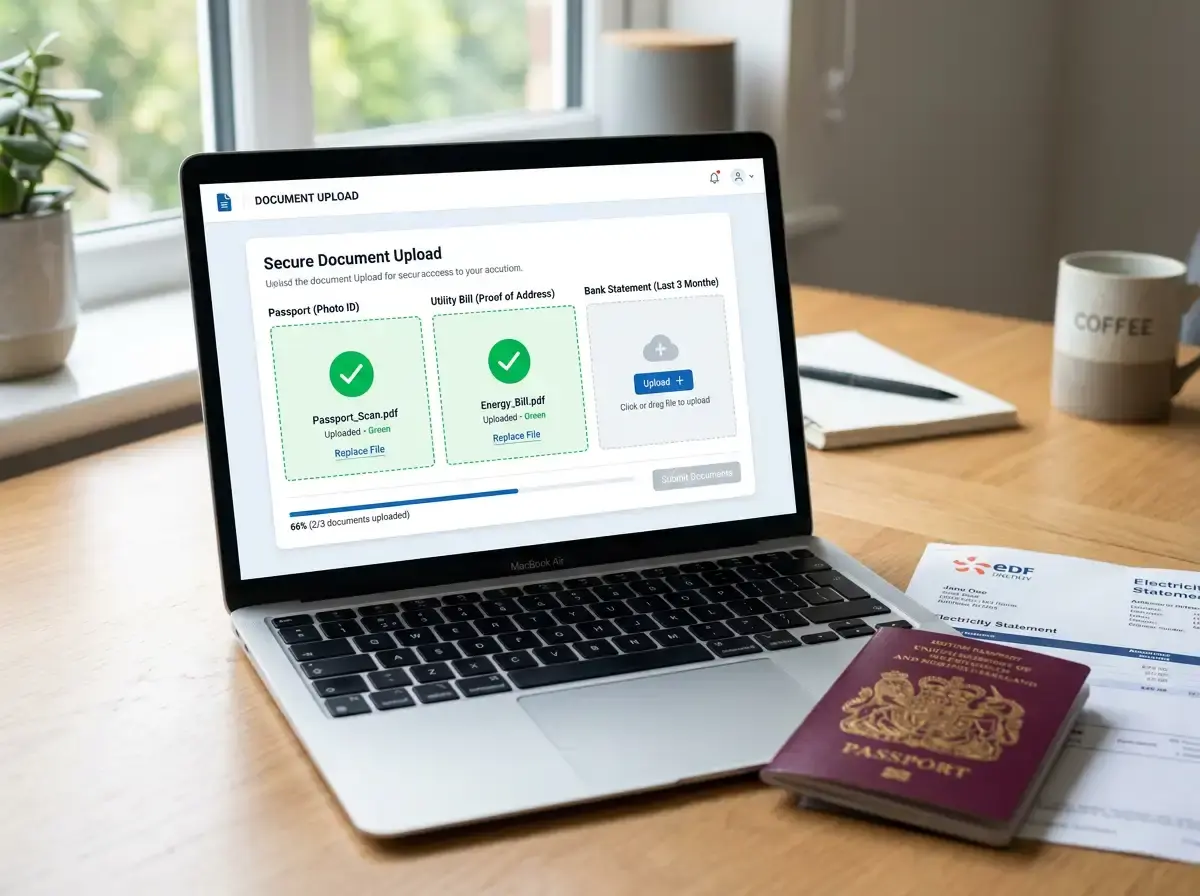
The third tier — source of funds — only applies when your deposit history or withdrawal request exceeds a certain threshold. This might be a payslip, tax return, business ownership documentation, or a letter from your bank confirming the origin of the funds. Thresholds vary wildly. Some casinos trigger source-of-funds checks at A$2,000 in cumulative deposits; others do not ask until A$10,000 or more. High-roller accounts almost always face this tier early. If you are depositing significant amounts through PayID, having source-of-funds documentation ready from day one prevents delays at withdrawal time.
How PayID Simplifies Name Verification
Here is where PayID offers a genuine structural advantage that I did not fully appreciate until my third casino account. When you deposit via PayID, the casino receives your registered PayID name directly from the NPP system. This is the name your bank holds on file, verified against your government-issued ID when you opened the bank account. In effect, PayID pre-verifies your legal name before the casino’s KYC team even looks at your documents.
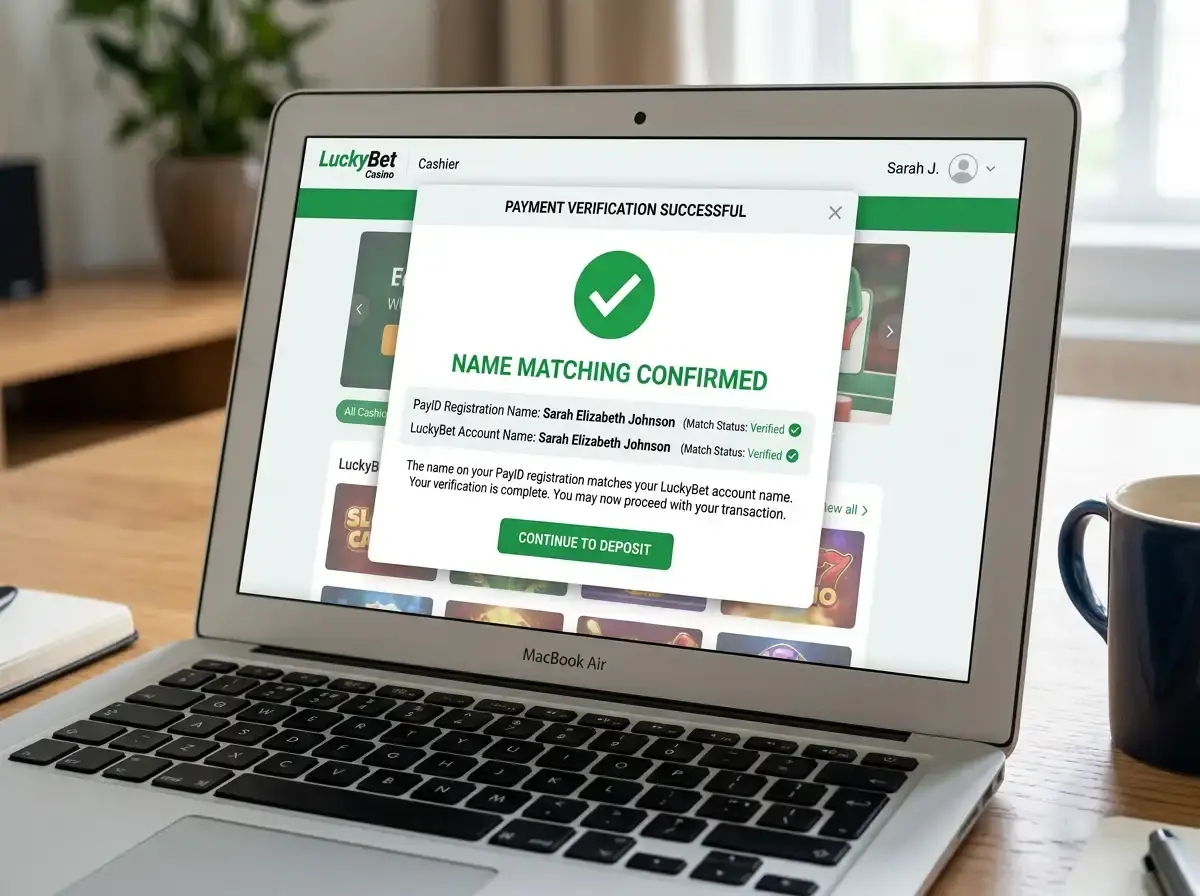
Confirmation of Payee — the name-matching service that has been used more than 100 million times since its July 2025 launch — adds another layer. When you initiate a PayID transfer, your bank checks the recipient’s registered name against what you have entered. If the names do not match, you receive a warning before the transfer proceeds. This system was built to prevent scam payments, but it has a secondary effect for casino deposits: it creates a verified chain of identity from your bank account through the payment to the casino’s receiving account.
The practical benefit is speed. When a KYC analyst reviews your withdrawal request and sees that your deposit came via PayID with a name matching your submitted ID, the verification is faster because one critical data point — name consistency — is already confirmed by the banking system. I have noticed that my KYC approvals at casinos where I deposited exclusively via PayID were consistently quicker than at casinos where I used a mix of methods. The sample size is small, but the pattern makes sense given the verification logic.
One caveat: PayID name matching is only as accurate as your bank’s records. If your bank has your name as “Matthew” but you registered at the casino as “Matt,” the mismatch still triggers a flag. Use your full legal name on both sides and the PayID advantage holds. Nicknames, shortened names, and missing middle names are the most common sources of friction. A quick check of your PayID registration in your banking app — usually under settings or payment preferences — confirms exactly what name the system broadcasts when you send a transfer.
Typical KYC Processing Timelines
I logged my KYC processing times across six different casinos in 2025 and 2026. The fastest approval took four hours. The slowest — the one with the blurry licence photo — took eleven days. The median sat around 48 hours for a clean first submission. These numbers align with what most offshore operators state in their terms: 24 to 72 hours for standard verification, potentially longer for source-of-funds reviews.

Several factors influence the timeline. Time of submission matters — uploading documents on a Friday evening means the compliance team likely starts reviewing on Monday. Document clarity matters enormously; a well-lit, in-focus photo of your licence against a dark background clears faster than a dim photo with glare. Casino workload is a factor too. New casinos with smaller compliance teams tend to have longer queues, while established operators with dedicated verification departments process faster.
The fastest path to KYC approval is submitting all three tiers of documentation immediately after your first PayID deposit, even before you request a withdrawal. This way, the compliance team processes your documents on their own timeline without a pending withdrawal creating urgency on your side. By the time you want to cash out, verification is already complete and the withdrawal processes without an additional hold.
Re-verification is also a reality. Some casinos require updated documents every 12 months or when your cumulative activity crosses a new threshold. Others re-verify only if you change personal details like your address or contact information. Keeping your document folder updated ensures re-verification is a five-minute upload rather than a scramble for paperwork you last saw in a drawer somewhere.
Making Verification Work For You, Not Against You
KYC is the one part of the casino experience that rewards preparation over spontaneity. Every delay I have seen — my own and those reported by other players — came down to avoidable mistakes: mismatched names, expired documents, low-quality uploads, or incomplete submissions. The verification process itself is mechanical. Submit the right documents in the right format with the right names, and it clears. PayID deposits give you a head start by establishing name consistency through the banking system before the casino’s compliance team ever opens your file. Use that advantage by making sure your registration details, PayID name, and submitted documents all tell exactly the same story.