


Three years ago, the idea of depositing into an online casino directly from an Australian bank account — in real time, with no intermediary — would have sounded like a niche experiment. Today, PayID has become the dominant deposit method at offshore casinos serving the Australian market. That shift happened faster than anyone in the payments industry predicted, and it happened because PayID solved a genuine problem for both players and operators: the friction, cost, and delay of moving money between a bank and a casino.
I have spent the past four years testing PayID casino deposits and withdrawals across dozens of operators, timing transactions down to the second and cataloguing every quirk, failure, and surprise along the way. What I have learned is that the phrase “PayID casino” gets used to describe a wide range of operator quality, from well-run platforms with genuine NPP integration to hastily assembled sites that slap a PayID logo on their cashier page and hope nobody looks too closely.
This guide is the comprehensive reference I wish had existed when I started. It covers the technical infrastructure that makes PayID casino transactions work, the regulatory framework that shapes how Australians interact with these platforms, the practical steps for setting up your first deposit, and the honest comparison between PayID and every other deposit method available in the Australian market. No rankings, no promotional language — just the mechanics, the data, and the context you need to make informed decisions.
What a PayID Casino Actually Means in Practice
The first time I tested a PayID casino deposit, I expected something resembling a bank transfer form — BSB, account number, reference code. Instead, the casino’s cashier page displayed a phone number. That was the operator’s PayID. I entered it into my banking app, confirmed the recipient name that appeared on screen, tapped send, and the casino credited my account within 40 seconds. No card details entered, no e-wallet middleman, no three-day clearing period.
A “PayID casino” is simply an online casino that accepts deposits via Australia’s PayID system — the addressing layer built on top of the New Payments Platform. Rather than sharing BSB and account numbers, the casino registers a PayID (a phone number, email address, or ABN) with their bank. You use that identifier to send funds from your own banking app. The NPP settles the transaction in real time, 24 hours a day, every day of the year including public holidays.
The terminology matters because not every casino using the label operates the same way. Some operators have direct NPP integration through an Australian-based payment processor, meaning your transfer routes through the NPP exactly as intended — bank to bank, settled in seconds. Others use offshore intermediaries that receive your PayID transfer into an Australian holding account and then forward the funds internally. The end result looks the same from your cashier screen, but the second model introduces an additional party handling your money, and the settlement speed depends on the intermediary’s processing schedule rather than the NPP’s real-time clearing.
With over 25 million registered PayIDs across Australia and the NPP processing more than 155 million transactions every month, the infrastructure supporting these transfers is not experimental. It is mainstream banking infrastructure repurposed for a use case its designers at the Reserve Bank of Australia did not specifically envision but cannot prevent — Australians sending their own money to offshore gambling operators through the same system they use to split restaurant bills and pay tradies.
The NPP Infrastructure Behind Every PayID Casino Transfer
Most guides skip this section, but understanding what happens technically during a PayID casino deposit explains why certain things go wrong and others work seamlessly. I find that players who understand the plumbing make better decisions about which operators to trust.
The New Payments Platform launched in February 2018, built from the ground up to replace Australia’s ageing batch-processing payment systems. It operates on three layers: the Basic Infrastructure, which handles the clearing and settlement of transactions in real time through the Reserve Bank of Australia; the PayID service, which maps human-readable identifiers to BSB and account numbers; and Osko, the commercial overlay service that most banks use to brand their NPP transfers to consumers.

When you initiate a deposit to a casino’s PayID, your banking app sends a lookup request to the PayID service managed by NPP Australia. The service queries the receiving bank’s registry and returns the name associated with that PayID — this is the name-matching step that shows you who you are about to pay. You confirm, and your bank submits a payment message through the NPP’s central infrastructure. The Reserve Bank’s Fast Settlement Service settles the payment in real time between the two banks’ exchange settlement accounts. The entire process — lookup, confirmation, clearing, settlement — completes in under a minute in normal conditions.
The system handled roughly 2 billion transactions in 2024, clearing AUD 1.99 trillion in value. Those are not small-value peer-to-peer transfers only — businesses, government agencies, and yes, gambling operators all run on the same rails. The wholesale cost per transaction has dropped from $0.39 when the NPP launched to approximately $0.04 today, which is why banks can offer PayID transfers at zero cost to consumers. Over 110 financial institutions are connected to the NPP, covering virtually every bank, credit union, and building society in Australia.
For casino deposits specifically, the critical technical detail is that NPP transactions are irrevocable once settled. There is no pending state, no hold period, no recall mechanism built into the protocol. The finality is what makes the system attractive to casinos — they credit your balance knowing the funds are guaranteed, unlike card payments which carry chargeback risk for months after the transaction. It is also what makes PayID riskier for players than reversible payment methods, a trade-off I explore in detail in the PayID gambling safety analysis.
Deposits and Withdrawals: The Asymmetry Nobody Mentions
If there is a single fact about PayID casinos that deserves its own heading, it is this: PayID deposits work exactly as advertised, and PayID withdrawals mostly do not exist. I have tested withdrawal processes at over 40 PayID-accepting casinos, and the pattern is consistent enough to call it an industry standard rather than an exception.
The deposit side is straightforward. You send money via PayID, the NPP settles it in seconds, the casino credits your account. Processing times in my testing range from 15 seconds to about three minutes depending on the operator’s internal crediting system. The NPP itself is never the bottleneck — it clears transactions in under ten seconds. Any delay beyond that sits with the casino’s payment processor or its account reconciliation software.

The withdrawal side is where expectations collide with reality. Most “PayID casinos” process withdrawals via standard bank transfer (BSB and account number), not via PayID. The reason is technical: PayID was designed as a credit-push system, meaning the sender initiates the payment. For a casino to send you a PayID withdrawal, the casino would need to initiate a payment to your PayID — which is technically possible but requires the operator to integrate PayID lookup and payment initiation into their payout system. Most offshore operators have not made that investment.
The practical consequence is that your deposit arrives in seconds but your withdrawal takes one to five business days through a conventional bank transfer. Some operators offer faster withdrawals through cryptocurrency or e-wallets, but if you want your winnings in your Australian bank account, you are usually waiting for a SWIFT or domestic transfer to clear. Understanding this asymmetry before you deposit prevents the frustration of expecting instant payouts that the casino never promised in its terms and conditions — however loudly the marketing suggests otherwise.
Australia’s Regulatory Landscape for PayID Gambling in 2026
I sat through a parliamentary committee hearing on online gambling in late 2025, and the one exchange that stuck with me was a senator asking a regulator whether PayID casino deposits could be blocked at the banking level. The answer was a qualified “technically yes, practically no” — and that tension between technical capability and regulatory appetite defines Australia’s current approach to PayID gambling.
The Interactive Gambling Act 2001 makes it illegal for operators to offer real-money online casino games to Australians without a domestic licence. No offshore casino holds an Australian licence for online casino products — only sports betting and lotteries are licensed domestically. The law targets operators, not players. An Australian using PayID to deposit at an offshore casino is not committing an offence, but the casino is violating Australian law by accepting the deposit. This asymmetry has been the status quo for over two decades, and enforcement against offshore operators has been limited to occasional website blocking orders and strongly worded letters.

The credit card gambling ban that took effect in August 2024 reshaped the deposit landscape significantly. With credit cards removed from the equation — a move affecting the 33.4% of Australian adults who participate in some form of gambling — players migrated to debit cards, e-wallets, cryptocurrency, and PayID. The ban’s architects intended to reduce gambling harm by eliminating the ability to gamble with borrowed money. PayID, which moves funds from existing bank balances, sits comfortably within the spirit of that regulation even though the casinos accepting those deposits operate outside it.
The Confirmation of Payee system, backed by $100 million in industry investment and live since July 2025, represents the most significant payment-level consumer protection relevant to casino deposits. Anna Bligh positioned its national rollout as placing Australia among a small group of countries with this safeguard across the entire banking sector. CoP does not block gambling transactions, but it does verify that the entity you are paying matches the name you expect — a genuine protection against fraudulent operators impersonating legitimate ones.
Looking ahead, the regulatory trajectory suggests increased transaction monitoring rather than outright blocking. Banks already flag patterns consistent with gambling spend — frequent small transfers to the same recipient, transfers at unusual hours, sudden increases in outgoing volume. Whether those flags trigger intervention or just data collection depends on each bank’s internal policies and on regulatory guidance that is still evolving.
Which Australian Banks Work With PayID Casinos
Every bank connected to the NPP supports PayID transfers, and that means every bank technically works for casino deposits. The more relevant question — and the one I get asked constantly — is which banks create friction and which ones process gambling-related transfers without incident.
The big four — Commonwealth Bank, Westpac, NAB, and ANZ — all support PayID and all process transfers to casino-associated PayIDs. None of them officially endorse or facilitate gambling deposits, and their terms of service typically include broad language about the right to decline transactions at their discretion. In practice, standard PayID transfers to casino operators process normally through all four. The banks’ fraud monitoring systems flag unusual patterns rather than blocking specific recipient categories.
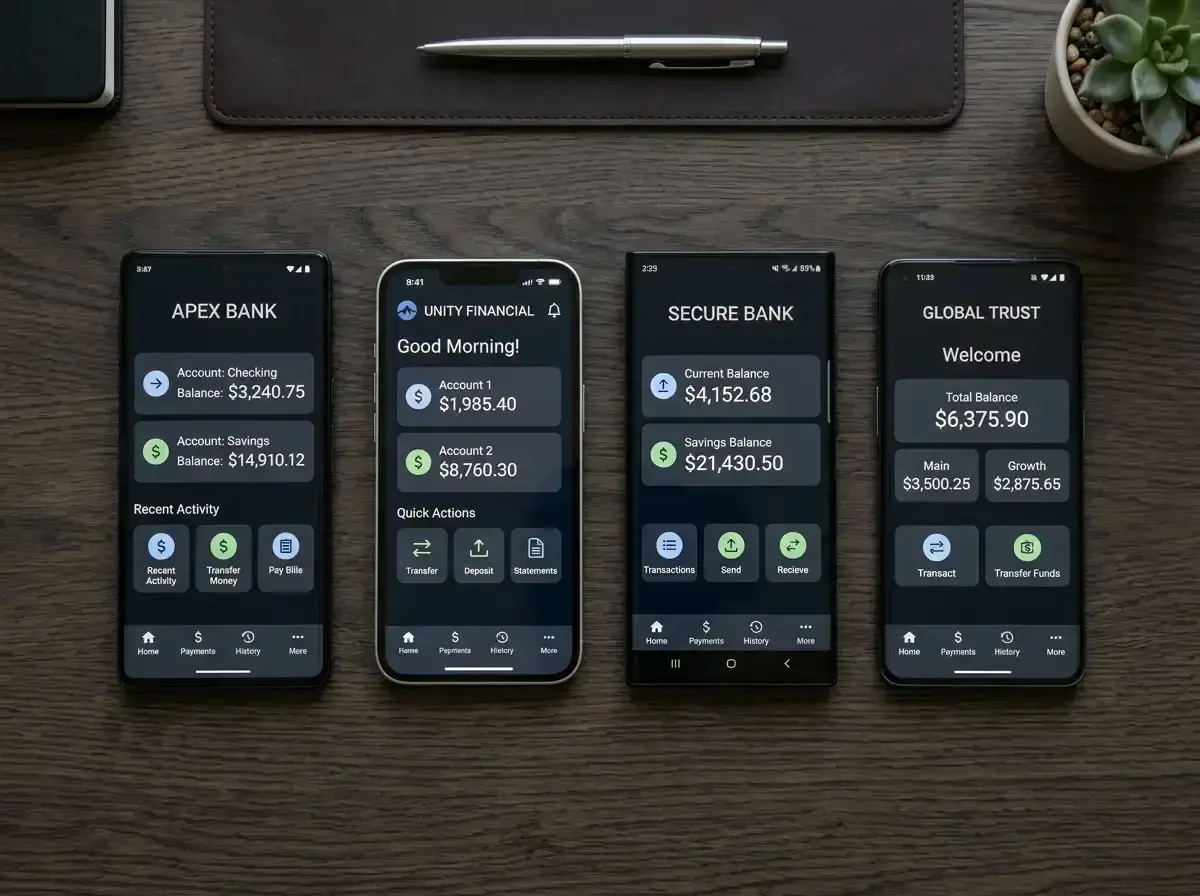
Regional banks and credit unions offer the same NPP connectivity. Bendigo Bank, Bank of Queensland, Suncorp, and most credit unions process PayID gambling deposits without additional verification steps. Smaller institutions sometimes have slightly different daily transfer limits — default caps of A$1,000 to A$5,000 for personal PayID transfers are common, though these can usually be raised through internet banking or by calling customer service.
Digital-only banks like UP, ING Australia, and Macquarie have become popular choices among regular PayID casino depositors because their apps tend to offer faster setup, real-time notifications as standard, and simpler limit-adjustment processes. The underlying NPP connectivity is identical to traditional banks — the transfers settle through the same infrastructure regardless of which institution initiates them.
AML/CTF obligations apply to all Australian financial institutions, with penalties reaching AUD 2.2 million per violation for serious non-compliance. Banks monitor transaction patterns and report suspicious activity to AUSTRAC. For individual players making routine recreational deposits, this monitoring runs in the background without affecting transactions. High-frequency or high-value gambling patterns are more likely to trigger enhanced due diligence — not necessarily a block, but a potential request for information about the source and purpose of funds.
PayID Against Other Deposit Methods: A Direct Comparison
When I compare deposit methods, I use four criteria: speed, cost, availability, and reversibility. Each method excels at different things, and the right choice depends on which criteria matter most to you. PayID wins on speed and cost but loses on reversibility — and that trade-off is worth understanding before you commit to any single method.
Debit cards remain the most widely accepted deposit method at Australian-facing casinos. Processing takes two to five minutes including 3D Secure authentication, fees range from zero to 2.5% depending on the operator, and the theoretical ability to initiate a chargeback exists — though the practical success rate for gambling-related chargebacks at offshore casinos is low. Debit cards also expose your card number and expiry date to the operator, creating a data security surface that PayID avoids entirely.
E-wallets like Skrill, Neteller, and MiFinity sit between PayID and debit cards in the speed category — deposits are near-instant once the e-wallet is funded, but funding the e-wallet from your bank account adds a step and sometimes a day of processing. E-wallet fees are the highest of any deposit method, typically 1-3% on deposits and often another percentage on withdrawals. The advantage is an additional layer of separation between your bank and the casino, plus broader international acceptance if you play at operators across multiple jurisdictions.
Cryptocurrency deposits match PayID for speed and beat it on privacy. Bitcoin and Litecoin transactions confirm in minutes, fees are minimal, and the casino never sees your banking details. The downside is volatility exposure — the AUD value of your deposit fluctuates between the moment you send crypto and the moment the casino converts it. Stablecoins like USDT eliminate that volatility but add the complexity of acquiring them in the first place. For players comfortable with crypto wallets, it is a viable alternative. For everyone else, PayID offers the same speed with familiar banking interfaces.
Traditional bank transfers via BSB and account number still work at most operators but have become obsolete for time-sensitive deposits. Processing takes one to three business days, the transfer does not settle on weekends or public holidays, and the cost advantage over PayID is zero since both use the same banking infrastructure. The only scenario where a direct bank transfer makes sense over PayID is if the recipient does not have a registered PayID — increasingly rare among established operators.
Setting Up Your First PayID Casino Deposit
I have walked enough people through their first PayID casino deposit to know exactly where the confusion points are. The process is simpler than most guides make it sound, but there are two steps where first-time depositors consistently pause, and addressing those upfront saves you the uncertainty.
First, confirm that you have a PayID registered with your bank. Open your banking app, navigate to the payments or transfers section, and look for “PayID” or “Manage PayID” in the menu. If you have never set one up, the registration takes about a minute — you choose an identifier type (phone number or email), enter it, and your bank links it to your selected account. You do not need your own PayID to send payments to a casino, but having one registered means the casino can potentially send withdrawals back to you via PayID rather than requiring your BSB and account number.

Second, the deposit itself. Go to the casino’s cashier page and select PayID as your deposit method. The casino will display its PayID — typically a phone number or email address — along with any required reference code. Open your banking app, start a new PayID payment, enter the casino’s PayID, and wait for the name-matching result. The name that appears should correspond to the casino’s business entity or its payment processor. If the name looks unrelated or resolves to a personal name, stop and reconsider. Enter the amount, add the reference code if required, review the details, and confirm.
The deposit should appear in your casino account within one to three minutes. If it does not arrive within ten minutes, contact the casino’s support team with your transaction receipt — the payment reference number from your banking app is the key detail they need to trace the deposit on their end. In my experience, delayed credits are almost always a reconciliation issue on the casino’s side rather than an NPP problem, and they resolve within an hour once support is aware.