

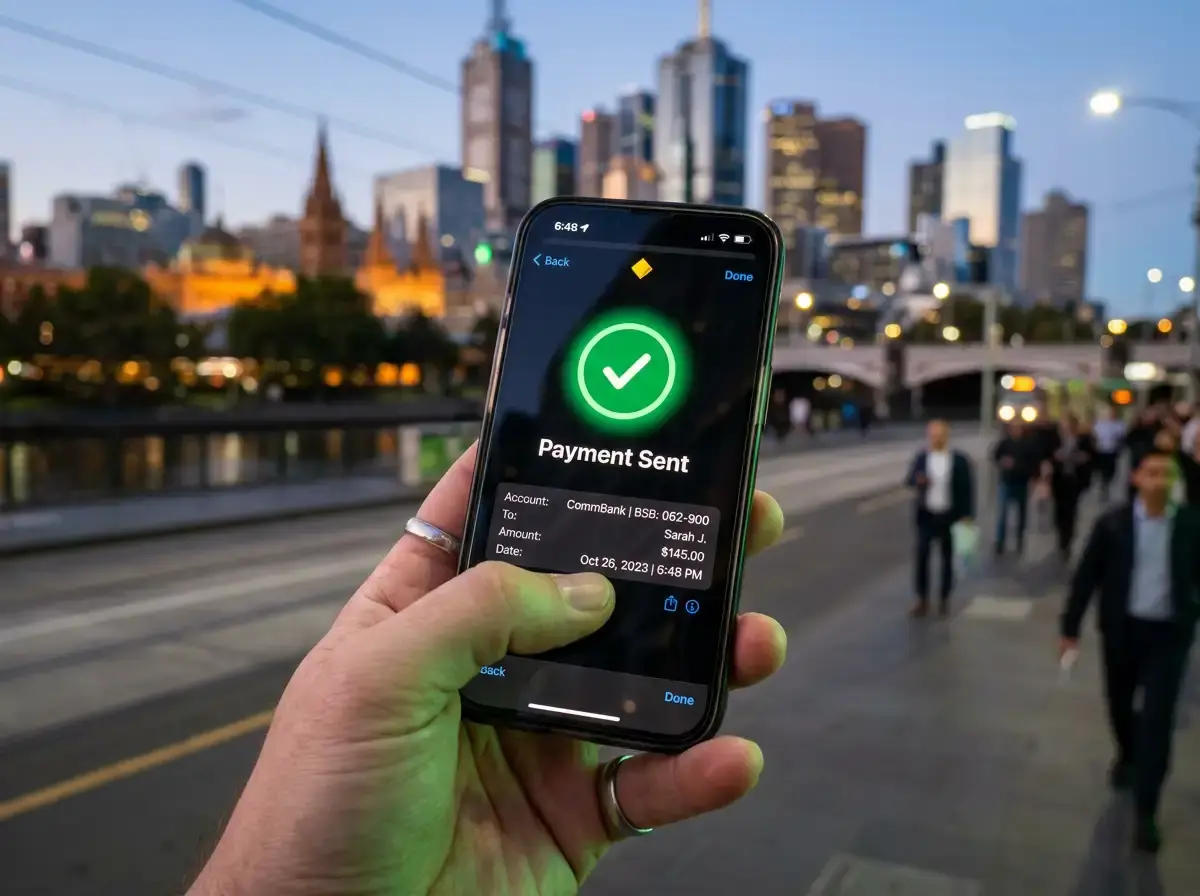
Whether you are evaluating PayID
I spent half of 2018 watching the New Payments Platform struggle to hit 20 million transactions a month. Banks were cautious, merchants were sceptical, and most Australians had never heard of PayID. Eight years later, the NPP processes roughly 2 billion real-time transactions per year, and a growing share of that volume flows straight into online casino cashiers. The infrastructure that was supposed to modernise grocery payments and rent splits has quietly become one of the fastest deposit rails available to Australian players.
That shift did not happen in a vacuum. Australia's online gambling market reached an estimated USD 5.5 billion in 2025, credit cards were banned from gambling transactions in August 2024, and regulators at the ACMA have blocked over 1,700 illegal sites since enforcement began. The payment landscape for casino players is unrecognisable compared to even three years ago — and PayID sits at the centre of it.

This guide exists because I got tired of reading the same recycled copy across every affiliate page in this niche. Vague promises about "instant deposits" with zero supporting data. No mention of the Confirmation of Payee system launched in July 2025. No explanation of why most casinos still cannot process a PayID withdrawal. No regulatory context whatsoever. I wanted to build something different: a resource grounded in NPP infrastructure data, ACMA enforcement records, and the actual mechanics of how money moves between your bank and a casino's merchant account.
Whether you are evaluating PayID against other deposit methods, trying to understand withdrawal realities, or simply want to know how the plumbing works beneath a "deposit in seconds" marketing line — this is the reference I wish existed when I started tracking PayID pokies and real-time payment adoption across the Australian iGaming sector.
The Five Things That Actually Matter About PayID Casino Deposits
- PayID deposits ride on NPP infrastructure that processed roughly 2 billion real-time transactions in 2025 — the same rails your bank uses for everyday transfers, with zero fees on personal accounts.
- Confirmation of Payee, launched July 2025, has been used over 100 million times and stopped 450,000 risky transfers at a single bank alone. It verifies recipient names before you send.
- Most "PayID withdrawal" claims are misleading. Casinos typically process outbound payments via standard bank transfer to your BSB and account number, not through the PayID addressing layer.
- ACMA has blocked 1,708 illegal gambling sites. The 2027 advertising reform will ban gambling ads during live sport. AU$112.7 million is allocated to address gambling harms over five years.
- PayID's instant, frictionless deposits are a double-edged feature. Bank-level gambling blocks and operator-side deposit limits are essential counterweights for maintaining control.
How the NPP Powers Every PayID Casino Transaction
A few years back, I sat through a payments conference in Sydney where a banking executive described the legacy BECS system as "a fax machine pretending to be email." That image stuck with me, because it captures exactly why the New Payments Platform had to exist. Every PayID casino deposit you make rides on NPP rails — and understanding that infrastructure is the difference between trusting marketing copy and understanding what actually happens to your money.
NPP (New Payments Platform) — Australia's real-time payment infrastructure, operated by Australian Payments Plus (AP+), enabling instant bank-to-bank transfers 24/7/365 through participating financial institutions.
OSKO — the consumer-facing payment service built on top of NPP rails, enabling real-time transfers between accounts at participating banks. When your banking app says "pay anyone instantly," it is using OSKO.
AP+ (Australian Payments Plus) — the entity formed in 2021 by merging NPP Australia, BPAY Group, and eftpos to operate and develop Australia's domestic payment infrastructure, including PayID.

The NPP launched in February 2018 with a modest throughput. In its first year, monthly volumes hovered around 15 to 20 million transactions. By 2024, that number had exploded to 1.6 billion transactions for the full year, moving AUD 1.99 trillion — a 23% jump from the prior year. The trajectory kept climbing: roughly 2 billion real-time transactions passed through the NPP in 2025, and monthly volume now sits at 155 million transactions. As Lynn Kraus, CEO of Australian Payments Plus, put it: real-time payments have become part of everyday life in Australia, with one in three payments now processed through the NPP.
The wholesale cost of a single NPP transaction has collapsed from $0.39 in 2019 to approximately $0.04 in FY25. That 90% cost reduction is a core reason PayID deposits carry zero fees for personal accounts — the infrastructure itself became cheap enough to give away at the consumer level.
For casino deposits specifically, the mechanics work like this. When you initiate a PayID transfer from your banking app, the payment message travels through the NPP's central infrastructure to the recipient bank in real time. There is no batch processing, no overnight settlement window, no three-day clearing cycle. The money moves — and confirms — within seconds. The NPP now handles more than 30% of all interbank transfers in Australia, and the legacy BECS system that powered old-fashioned bank transfers is scheduled for decommission by 2030.
Why this matters for casino players: Traditional bank transfers route through BECS, which batches transactions and processes them in cycles. That is why a "standard bank transfer" deposit at an online casino takes one to three business days. A PayID deposit bypasses BECS entirely, using the NPP's real-time message-and-settlement layer. Same destination, fundamentally different plumbing.
PayID itself is an addressing layer on top of the NPP. Instead of sharing your BSB and account number — details that, if combined, could theoretically be misused — you register a PayID linked to your mobile number, email address, or ABN. The recipient bank resolves that identifier to the correct account in real time. More than 25 million PayIDs were registered across Australia as of early 2025, and some industry estimates place the figure above 27 million by mid-year. That adoption curve explains why operators targeting Australian players have moved to support PayID: the addressable user base is now genuinely massive.

None of this infrastructure is unique to gambling. The same NPP rails process your rent payment, your split dinner bill, and your tax refund. What is unique is how the speed and fee structure of the NPP align with what casino players actually need: fast deposits, no intermediary fees, and a system backed by the same banks that hold their everyday accounts. The technical foundation is not a marketing gimmick — it is Australia's national payment backbone.
Step-by-Step: Making a PayID Deposit at an Online Casino
I tested my first PayID casino deposit in late 2022. The whole process, from opening my banking app to seeing the balance update in the casino cashier, took under 90 seconds. The mechanical simplicity is the point — but there are details in each step that affect whether your transfer lands instantly or gets stuck in a holding pattern.
Step 1: Locate the casino's PayID details
Navigate to the cashier or banking section of the casino. Select PayID or "bank transfer" as your deposit method. The casino will display a PayID address — typically an email format like deposits@[operator-domain] — along with a reference number. That reference number is critical. Without it in your transfer description, the casino's payment processor cannot match the incoming funds to your account.
Step 2: Initiate the transfer from your banking app
Open your bank's mobile app or internet banking. Go to "Pay Anyone" or "Transfer," then select PayID as the recipient type. Enter the casino's PayID address. Your bank will display the registered name of the PayID recipient — this is the name-matching feature that over 25 million registered PayIDs rely on. Verify that the name matches the operator you expect. Enter the deposit amount and paste the reference number into the description field.
Step 3: Confirm and wait for the balance credit
Authorise the payment through your banking app's standard security (biometric, PIN, or 2FA). The NPP processes the transfer in real time. In most cases, the casino's payment processor detects the incoming funds within seconds. Automated systems match the reference number and credit your casino balance. Manual processing queues, which some smaller operators still use, can add anywhere from five minutes to a few hours during off-peak periods.
Deposit timing benchmark
NPP transfer execution: typically under 10 seconds from authorisation to settlement. Casino-side matching: 5 seconds to 15 minutes depending on whether the operator uses automated or manual reconciliation. Total realistic window: 15 seconds to 20 minutes. The "instant deposit" marketing claim is accurate for the NPP leg of the transfer. The variable is always the casino's own processing pipeline.
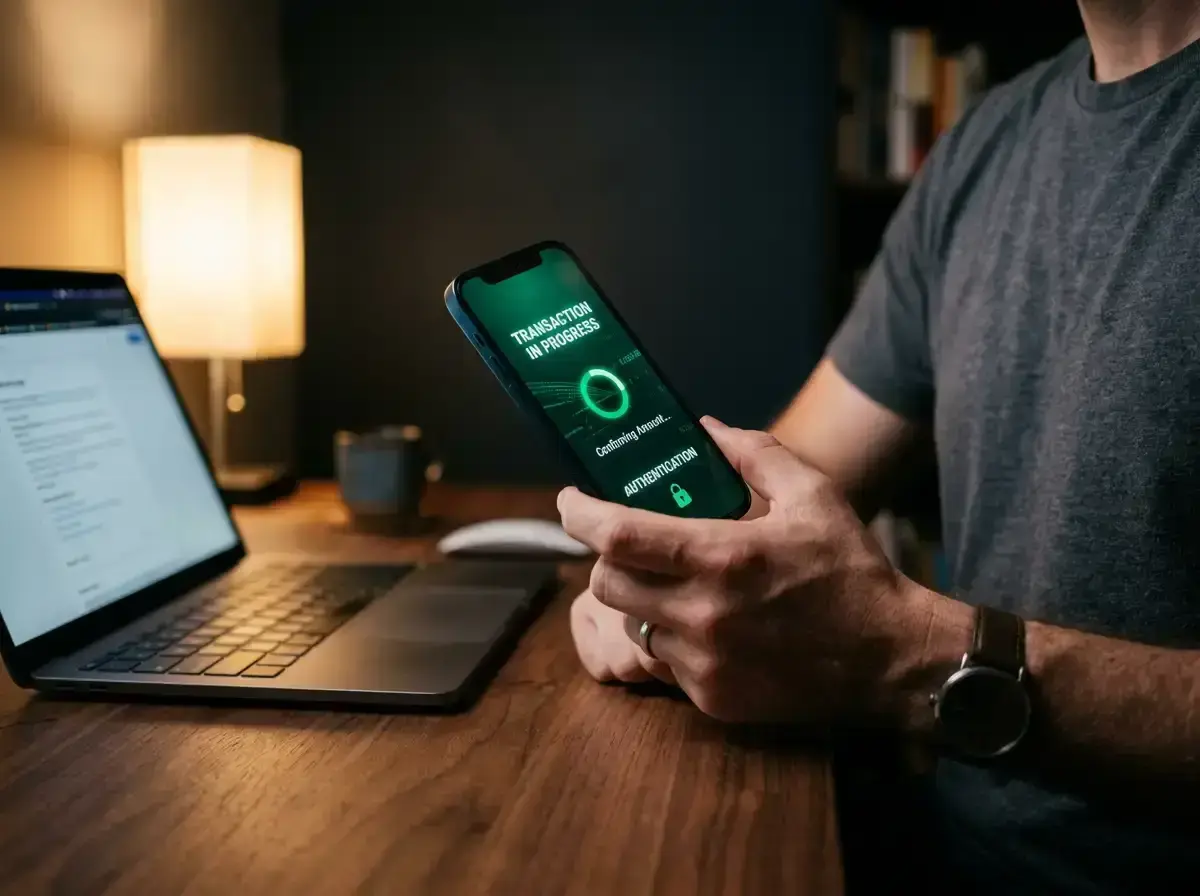
One thing worth noting: the PayID deposit flow does not involve any third-party payment gateway in the traditional sense. You are sending money directly from your bank account to the operator's bank account through the NPP. There is no card network, no e-wallet intermediary, no currency conversion. That directness is both PayID's strength — no middleman fees, no rejected card transactions — and its limitation, because it means the casino cannot "pull" funds from your account. Every deposit is a push payment initiated entirely by you.
A common friction point I see is the reference number. Some operators generate a unique reference per deposit request that expires after 30 minutes. If you enter an old or incorrect reference, the funds still arrive at the casino's bank account, but the automated matching fails. At that point, you are waiting for a manual review by the finance team — which, depending on the operator, can take anywhere from a few hours to a full business day. Always double-check the reference before hitting confirm.
PayID Withdrawals: What Casinos Actually Offer
Here is the part where the marketing falls apart. I have reviewed dozens of casino cashier pages that prominently advertise "PayID withdrawals," and the reality behind that label ranges from misleading to outright fiction. Let me explain what is actually happening when you request a withdrawal at a PayID-accepting casino.
The core problem is architectural. PayID is a push-payment system. You, the account holder, initiate a transfer from your banking app to a recipient. The casino cannot reverse that flow and "send to your PayID" in the same way. What most operators actually do when you select "PayID withdrawal" is initiate a standard NPP transfer (or sometimes a BECS transfer) to the BSB and account number associated with your verified bank account. They may use your PayID to confirm the account name matches your casino profile — one in four PayID users has stopped or corrected a payment thanks to that name-display feature — but the withdrawal itself is a conventional outbound bank transfer on the operator's end.
Deposit via PayID
You push funds directly to the casino's PayID. Arrives in seconds via NPP. No intermediary.
"Withdrawal via PayID"
Casino initiates an outbound bank transfer to your BSB/account. May use PayID for name verification only. Timing depends on the operator's processing queue and KYC status.
Typical withdrawal timeline
24 to 72 hours for first-time withdrawals with KYC pending. 2 to 24 hours for verified accounts at operators with automated processing. Some operators quote 2 to 7 business days.
The gap between deposit speed and withdrawal speed is not a PayID limitation — it is an operator limitation. Casinos batch outgoing payments, run internal fraud checks, and process KYC verification before releasing funds. Even operators using NPP rails for outbound transfers still impose a manual approval step. The instant withdrawal claim deserves scrutiny every time you encounter it.
A pattern worth watching: Some operators have started using NPP for outgoing transfers to verified accounts, which genuinely reduces withdrawal times to under an hour once the manual approval clears. But this is operator-specific, not a PayID feature. The infrastructure supports instant outbound settlement — the bottleneck is always the casino's internal compliance and risk pipeline.

What does this mean in practice? If fast withdrawals matter to you — and they should, because the speed at which an operator releases funds is one of the clearest signals of operational integrity — the payment method you chose for your deposit is less important than the operator's processing track record. A casino with efficient KYC automation and NPP-enabled outbound transfers will pay you faster regardless of whether you deposited with PayID, a debit card, or a traditional bank transfer. The deposit rail and the withdrawal rail are separate conversations, and conflating them is one of the most common mistakes I see in this space.
Deposit Speed: PayID vs Cards vs Bank Transfer vs Crypto
Every payment method promises speed. None of them define what "speed" actually means in the context of a casino deposit. I have tested all four major deposit channels across multiple operators over the past two years, and the differences are less about the headline number and more about where the delays hide.
| Method | Transfer execution | Casino-side crediting | Realistic total | Fees to player | Availability |
|---|---|---|---|---|---|
| PayID (NPP) | Under 10 seconds | Seconds to 20 minutes | 15 seconds — 20 minutes | Zero (personal accounts) | 24/7/365 |
| Debit card (Visa/Mastercard) | Seconds (authorisation) | Usually instant | Under 1 minute | Zero to 2.5% (operator-dependent) | 24/7 |
| Traditional bank transfer (BECS) | Batched processing | After settlement | 1 — 3 business days | Zero to A$2 | Business days only |
| Cryptocurrency (BTC/ETH) | 10 min — 1 hour (network-dependent) | After confirmations | 15 minutes — 2 hours | Network gas/mining fees (variable) | 24/7 |

The table tells the simple story, but the nuances matter. Debit cards are technically the fastest end-to-end deposit method at most casinos, because the card network handles both authorisation and crediting in a single integrated flow. The casino knows the funds are guaranteed the moment the authorisation response comes back. PayID is nearly as fast on the bank side — often faster — but the casino-side crediting step adds a variable delay because the operator must match the incoming NPP payment to your account using the reference number.
The credit card ban factor
Since August 2024, credit cards are banned for online gambling in Australia. That removed the single most popular deposit method overnight and pushed a significant volume of players toward debit cards, PayID, and crypto. PayID's zero-fee structure and the fact that it requires no card details make it the most natural migration path for players who previously used credit.
Crypto deposits deserve a caveat. The transfer execution time depends entirely on the blockchain network and current congestion. A Bitcoin deposit during peak network activity can take 30 to 60 minutes for the required confirmations. Ethereum is faster but still variable. And the gas fees — which fluctuate with network demand — can make small deposits disproportionately expensive. PayID wins the cost argument against crypto every time for AUD-denominated transactions, though crypto retains an edge for players who prioritise pseudonymity over speed.
Traditional BECS transfers are effectively a relic for casino deposits. The 1-to-3-day processing window, combined with the fact that BECS does not operate on weekends or public holidays, makes it the slowest option by a wide margin. With BECS scheduled for decommission by 2030, this method is on a clear sunset trajectory.
Security Architecture: Confirmation of Payee and Beyond
The single most important development in Australian payment security since I started covering this space launched in July 2025, and almost nobody in the casino affiliate world has written a word about it. Confirmation of Payee — CoP — is a name-matching verification layer that cross-checks the recipient's registered name against the name you enter before the payment is sent. It has been used more than 100 million times since launch. At one major bank alone, over 450,000 payments were cancelled after CoP returned a "no match" result — and more than 10,000 of those cancelled transfers were heading to accounts flagged in the Australian Financial Crimes Exchange database.
Australia's banking sector invested $100 million to build this system. Anna Bligh, CEO of the Australian Banking Association, framed it as an effort to give customers confidence that they are transferring money to the right person and not to a scammer. When the rollout completes across all financial institutions, Australia will be one of only a handful of countries with this technology deployed sector-wide.
How CoP works for casino deposits: When you enter a casino's PayID and initiate a transfer, your bank sends a verification request to the recipient bank. The recipient bank checks the PayID against the registered account name and returns one of three results: full match, partial match, or no match. If the name you entered does not match the registered account holder, your banking app displays a warning before the payment proceeds. You can still override the warning — CoP is advisory, not blocking — but the friction is deliberate. For a deeper technical breakdown, see the PayID safety analysis.
Beyond CoP, PayID's security model rests on a fundamental design choice: you never share your BSB and account number with the casino. The PayID addressing layer abstracts those details away. This matters because BSB-plus-account-number combinations, once shared, cannot be "unshared." They are permanent identifiers for your bank account. PayID acts as a proxy — the casino sees your PayID (email or phone), but the underlying account details remain with your bank.
That said, PayID is not a force field. Card fraud across Australia still totalled $854 million in FY25, and online scam losses reported through Scamwatch reached $122 million in just the first nine months of 2025. PayID-specific scams do exist — marketplace fraud where a buyer requests your PayID "to verify the payment" and then uses the displayed name to build a social engineering attack. The payment system protects the mechanical transfer; it does not protect you from operators who mishandle funds or from your own decision to deposit at an unvetted site.
Do
- Verify the PayID recipient name matches the operator's registered business name before confirming
- Use a dedicated email-based PayID for gambling transactions rather than your primary phone number
- Check CoP results carefully — a "partial match" or "no match" on a casino transfer is a red flag worth investigating
- Keep records of every PayID transfer reference number and the corresponding casino transaction ID
Don't
- Override a CoP "no match" warning without independently verifying the recipient through the casino's support channels
- Share your PayID with anyone claiming to need it for "verification" or "account linking" outside the casino's official cashier
- Assume that using PayID means the casino itself is legitimate — the payment rail does not vet the operator
- Ignore your bank's transaction alerts or disable push notifications for outgoing transfers
The security picture for PayID casino transactions is materially better than it was two years ago. CoP alone has prevented hundreds of thousands of misdirected payments. But security is a layered system, and the payment method is only one layer. The operator's licensing, the regulatory environment, and your own due diligence are the others — and none of them should be delegated to the payment infrastructure alone.

Australia's Gambling Regulation in 2026: ACMA, BetStop, and the Ad Reform
I have lost count of the number of PayID casino pages that mention "the Interactive Gambling Act" in passing and then move on as if that single phrase constitutes regulatory context. The reality is far more dynamic — and far more consequential for anyone depositing real money at an offshore operator. Australia's regulatory landscape shifted more in the past 18 months than in the previous decade, and those shifts directly affect which operators accept PayID, how they operate, and what protections exist for players.
The ACMA — the Australian Communications and Media Authority — is the enforcement body responsible for blocking access to illegal online gambling services. As of May 2026, ACMA has blocked 1,708 illegal gambling websites and affiliate domains. Another 230-plus operators left the Australian market voluntarily after receiving enforcement notices since 2017. That is not a passive regulator. ACMA actively investigates complaints, issues formal warnings, and requests ISP-level URL blocks for sites that offer services to Australians without the appropriate licence.

The offshore reality: Most casinos that accept PayID from Australian players are licensed offshore — Curacao, Malta, Anjouan, and similar jurisdictions. They operate in a grey zone: the Interactive Gambling Act 2001 targets operators, not individual players, but using an unlicensed service means you have no domestic legal recourse if the operator withholds funds or closes your account. The legal status of PayID casinos is more nuanced than any single sentence can capture.
BetStop, Australia's National Self-Exclusion Register, launched in August 2023 and had accumulated 49,382 registrations by September 2025, with 31,838 of those exclusions still active. The programme is mandatory for licensed Australian wagering operators, who must check every new account against the register. 39% of registrants chose a lifetime exclusion. The enforcement gap, however, is offshore: operators without an Australian licence are not required to integrate with BetStop, which means the register's protective reach does not extend to the majority of PayID-accepting casino sites.
The most consequential policy shift for the broader market is the advertising reform taking effect on 1 January 2027. Television gambling ads will be capped at a maximum of three per hour between 6:00 AM and 8:30 PM, and gambling advertising will be completely banned during live sports broadcasts. Anika Wells, Australia's Minister for Communications and Sport, described the reform as a response to gambling addiction as a serious public health issue, calling it strong reform to reduce gambling harms. The federal government has backed the policy with AU$112.7 million allocated over five years for the "Addressing Online Gambling Harms" programme.
The regulatory trajectory is clear: tighter enforcement, reduced advertising exposure, and increasing compliance costs for operators. The late-2025 AML/CTF Amendment raised corporate penalties to AUD 2.2 million per violation and introduced the possibility of licence revocation. For players, this means the operators that survive the regulatory tightening will generally be the ones with stronger compliance infrastructure — which correlates, imperfectly but meaningfully, with faster withdrawals and more reliable fund security.
The Numbers Behind Australian Online Gambling
Numbers do not lie, but they do require context. I have seen market size estimates for Australian online gambling range from USD 1.6 billion to USD 6.1 billion depending on who is counting and what they include. Here is my attempt to cut through the noise with the most defensible figures available.
Australians recorded the highest per-capita gambling losses in the world: $32 billion annually across all legal gambling channels, according to figures cited by the Australian Institute of Family Studies from H2 Gambling Capital. That is not a typo. Thirty-two billion dollars, in a country of 26 million people.
The online segment specifically was valued at approximately USD 5.5 billion in 2025 by IMARC Group, with projections reaching USD 9.0 billion by 2034 at a compound annual growth rate of 5.67%. Individual player losses reached A$1,555 per adult in the 2022-23 financial year — an 11.5% increase year-on-year — and IBISWorld projects that figure to climb further to A$1,572 per capita in 2025-26.
A$31.5 billion
Total gambling losses in the 2022-23 financial year — a 20-year record across all channels.
60.3%
Share of Australian adults who participated in some form of gambling in 2024, down from 65.6% in 2019.
13.6%
Proportion of gamblers classified as exhibiting at-risk behaviour in 2024, up from 11.6% the prior year.

The participation rate is declining — 60.3% in 2024 versus 65.6% five years earlier — but that headline masks a more troubling dynamic. The share of gamblers showing at-risk behaviour rose to 13.6% in 2024, up from 11.6% in 2023. Fewer Australians are gambling, but those who do are gambling more intensively. The total wagering turnover hit A$244.3 billion in 2022-23, with online betting alone accounting for A$75.4 billion of that figure.
These are not abstract statistics for a payments analyst. They are the demand curve that drives every decision an operator makes about payment integration, deposit limits, and market entry. When the addressable market spends this aggressively, every point of friction in the deposit process — a declined card, a three-day BECS transfer, a failed e-wallet authentication — represents lost revenue. PayID's zero-fee, instant-settlement model is not popular because of clever marketing. It is popular because it removes friction for a player base that, statistically, transacts at the highest per-capita rate on the planet.
Which Banks Support PayID for Casino Payments
The short answer is: almost all of them. The longer answer involves some important caveats about gambling-specific transaction monitoring that the short answer conveniently ignores.
Coverage snapshot: More than 114 million bank accounts are connected to the NPP for sending and receiving payments as of late 2024. Every major bank and the vast majority of smaller institutions support PayID registration and NPP transfers.

The Big Four — CommBank, ANZ, NAB, and Westpac — all support PayID and process NPP transactions. So do the major regional banks: Bendigo and Adelaide Bank, Bank of Queensland, Suncorp, Macquarie, and ING Australia. Digital-only banks like Up, Volt (while it operated), and 86 400 (now merged into NAB) built their entire transaction infrastructure on NPP rails from day one. Credit unions and mutual banks connected through the industry's shared infrastructure have also come online progressively.
Here is where it gets complicated. Supporting PayID does not mean a bank will process every PayID transfer without scrutiny. Several Australian banks have implemented gambling transaction monitoring that can flag, delay, or in some cases block transfers to known gambling-related accounts. This is especially relevant following the August 2024 credit card gambling ban — banks increased their monitoring of all gambling-adjacent transactions, including debit and NPP transfers, as part of broader responsible gambling commitments.
The practical impact varies. Some banks display a gambling-specific warning when they detect a transfer to a known operator account. Others may impose daily transfer limits that are lower than the standard NPP ceiling for gambling-coded transactions. A small number of banks allow customers to set voluntary gambling blocks on their accounts, preventing any outgoing transfer to flagged recipients. These controls operate at the bank level, not the NPP level — the infrastructure itself does not distinguish between a rent payment and a casino deposit.
If your bank blocks or flags a specific PayID transfer, the issue is almost certainly with your bank's gambling transaction policy, not with PayID itself. Contacting your bank to understand their specific rules — and, if relevant, adjusting your voluntary spending controls — is the correct first step. The NPP and PayID infrastructure remain payment-type-agnostic by design.
PayID and Online Pokies: Why Speed Matters for Slot Players
I did not expect deposit speed to be a differentiating factor for pokies players when I first started analysing PayID adoption patterns. Slots are not time-sensitive in the way live dealer games or in-play betting are. You do not need your funds in three seconds to catch a spin. But after talking to operators and reviewing session data, the connection became obvious — and it is not about the spin itself.
The link between deposit speed and pokies is about session continuity. A player who runs through their bankroll and decides to reload faces a choice: wait for a slow deposit method to clear, or abandon the session. Every minute of delay in that reload window is a point where the player might close the tab, switch to a competitor, or simply walk away. For operators, PayID's near-instant deposit speed reduces that dropout window to almost zero. For players, it means the deposit arrives before the impulse to continue fades — which is a double-edged reality that deserves honest acknowledgement.

From a purely mechanical standpoint, PayID-funded pokies function identically to pokies funded through any other deposit method. The RTP (Return to Player) percentage, the volatility model, and the random number generation are all determined by the game provider's software, not by your payment rail. A slot with a 96.5% theoretical RTP pays back the same proportion over millions of spins regardless of whether you deposited with PayID, a debit card, or a cryptocurrency. The payment method determines how fast your money arrives and what it costs to move — nothing more.
Speed and cost are the inputs a player can control. RTP, volatility, and hit frequency are built into the game's mathematics. Understanding the difference between what your payment method affects and what it does not is fundamental — and it is a distinction that most guides in this space fail to draw clearly.
The pokies segment accounts for a significant share of online casino revenue across Australian-facing operators, and the deposit method distribution within that segment has shifted measurably since the credit card ban. PayID and debit cards now dominate where credit once led, and the zero-fee structure of PayID makes it particularly suited to the frequent, moderate-sized deposits that characterise typical pokies sessions.
Fee Breakdown: What You Actually Pay
"Zero fees" is PayID's headline selling point, and it is — with a few asterisks — accurate. But "zero" can mean different things depending on where you look in the transaction chain, and I want to break that apart so you understand exactly what you are and are not paying for.
Cost stack for a A$200 PayID casino deposit
NPP transaction fee to you: $0.00. Personal PayID transfers carry no fee from any major Australian bank. The wholesale cost per NPP transaction has dropped to roughly $0.04, absorbed entirely by the financial institutions as a cost of operating on the platform.
Casino deposit fee: $0.00 at the vast majority of operators. Some charge a flat processing fee (typically A$1-2) for bank transfer deposits under a minimum threshold, but this is rare for PayID-coded transactions.
Currency conversion: $0.00. PayID operates exclusively in AUD. If the casino holds funds in a foreign currency, the conversion happens on their side, not yours, and any spread they apply is baked into the exchange rate displayed in your account — not itemised as a "fee."
Total visible cost: $0.00 on a standard A$200 deposit.
Compare that to a debit card deposit, where some operators charge a processing surcharge of 1.5% to 2.5%. On a A$200 deposit, that is A$3 to A$5 gone before you have placed a single bet. Cryptocurrency deposits carry network fees (gas for Ethereum, mining fees for Bitcoin) that fluctuate wildly — I have seen Ethereum gas fees range from under A$1 to over A$30 during network congestion spikes. Traditional BECS transfers are generally fee-free for the sender but occasionally attract a flat receiving fee on the casino side.
The hidden cost with PayID is not a fee — it is the absence of chargeback protection. When you pay with a debit card, the card network provides a dispute mechanism. If the operator does not credit your deposit or closes your account improperly, you can initiate a chargeback through your bank. PayID transfers are final. Once the NPP settles the payment, your bank cannot reverse it unilaterally. The money is gone unless the recipient voluntarily returns it or a court orders restitution. That finality is a feature for operators (no chargebacks means no fraud-related revenue losses) and a risk for players. It is not a fee, but it has a cost.
Responsible Gambling Tools for PayID Users
I debated whether to put this section at the end of the guide or much earlier. I settled on here because the data demands it: the share of Australian gamblers exhibiting at-risk behaviour climbed to nearly one in seven in 2024 — a measurable year-on-year increase. When risky patterns are that prevalent, every aspect of the payment experience — including how easy it is to deposit — needs to be discussed alongside the tools designed to help players maintain control.
The speed paradox: PayID's greatest technical advantage — near-instant deposits with zero friction — is also its greatest risk factor for vulnerable players. The absence of a delay window means there is no built-in cooling-off period between the decision to deposit and the funds appearing in a casino balance. Understanding and proactively using the available control tools is not optional — it is the responsible counterweight to frictionless payment infrastructure.
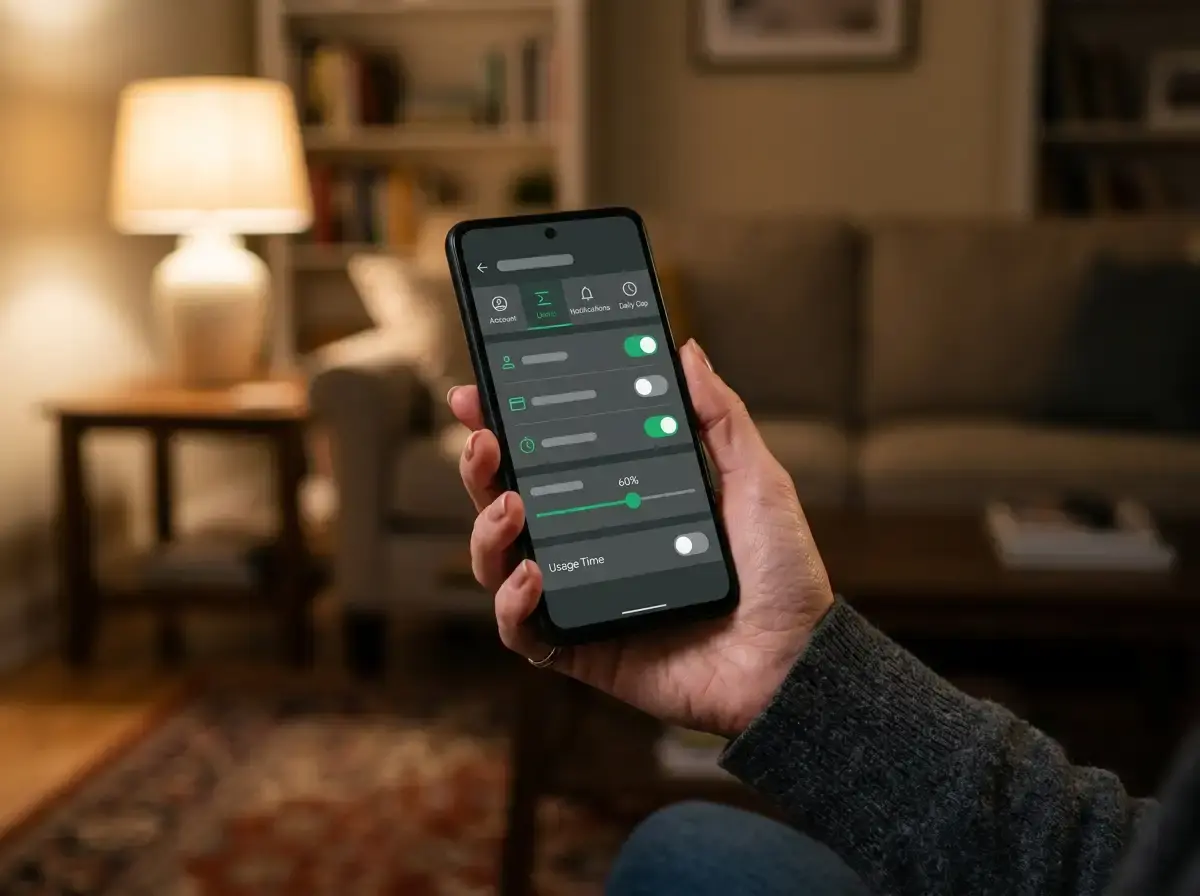
BetStop, the National Self-Exclusion Register mentioned in the regulatory section above, crossed 49,000 registrations by September 2025 — and 39% of those people chose a lifetime ban. The register works for domestically licensed wagering services, but offshore-licensed casinos are not required to integrate with it. That gap matters enormously for PayID casino users, because the majority of operators accepting PayID from Australian players hold offshore licences. If self-exclusion is part of your harm-reduction strategy, bank-level transaction blocks are the more reliable enforcement mechanism for offshore sites.
Bank-level controls offer an additional layer. Most major Australian banks now provide voluntary gambling blocks or spending limits that can be activated through mobile banking apps. These controls operate at the transaction level: if you set a gambling block, your bank will decline outgoing transfers to known gambling-coded accounts. Some banks also offer daily or weekly spending caps for gambling transactions specifically. These are blunt instruments — they cannot distinguish between a well-managed recreational deposit and a distress-driven one — but they provide a self-imposed friction layer that PayID's design otherwise lacks.
Do
- Set a deposit limit with your bank before your first PayID casino transfer, while your judgment is unaffected by an active session
- Use your casino account's built-in tools: session timers, loss limits, reality checks, and deposit caps are available at most operators
- Review your transaction history monthly — banking apps make this easy, and patterns become visible over time
Don't
- Rely solely on willpower to manage deposit frequency when the payment method is designed to eliminate friction
- Assume that offshore casinos honour BetStop registrations — verify directly with the operator
- Dismiss bank-level gambling blocks as inconvenient — the inconvenience is the point
If you or someone you know is experiencing gambling-related harm, support is available. Gambling Help Online and the National Gambling Helpline (1800 858 858) provide free, confidential assistance 24 hours a day. These services are funded through state and federal programmes, including the AU$112.7 million "Addressing Online Gambling Harms" allocation announced in the 2026-27 federal budget.
Frequently Asked Questions About PayID Casinos
What is PayID and how does it work at online casinos?
PayID is an addressing system built on Australia's New Payments Platform. Instead of sharing your BSB and account number, you register a PayID — linked to your email, phone number, or ABN — through your banking app. When making a casino deposit, you transfer funds from your bank to the casino's PayID address. The NPP processes the transaction in real time, typically settling within seconds. The casino's payment system then matches the incoming transfer to your account using the reference number you included in the payment description.
Is PayID safe to use for online gambling?
The payment mechanism itself carries strong security credentials. PayID does not require you to share your BSB or account number with the casino. The Confirmation of Payee system, live since July 2025, verifies the recipient's name before you confirm the transfer. Your bank's standard authentication (biometric, PIN, or 2FA) protects the transaction authorisation. However, PayID does not verify whether the casino operator is licensed or trustworthy — it secures the payment rail, not the destination. Due diligence on the operator remains your responsibility.
What withdrawal methods are available at PayID casinos?
Most casinos that accept PayID deposits process withdrawals via standard bank transfer to your BSB and account number, sometimes routed through the NPP for faster settlement. Some operators also offer crypto withdrawals, e-wallet payouts, or cheque disbursements. True "PayID withdrawal" — where the casino pushes funds to your PayID address — is not a standard feature, because PayID is architecturally a push-payment system initiated by the sender. The casino typically uses your verified bank details for outbound transfers, with PayID serving only as a name-verification layer.
Are PayID casinos legal in Australia?
The Interactive Gambling Act 2001 makes it an offence for operators to offer certain interactive gambling services to Australians without appropriate licensing. The law targets operators, not individual players. Most PayID-accepting casinos hold offshore licences (Curacao, Malta, or similar jurisdictions) and operate outside the direct enforcement reach of Australian regulators. ACMA actively blocks unlicensed sites — 1,708 as of May 2026 — but new operators continuously enter the market. The legal position for players is a grey zone: not criminalised, but not protected by domestic consumer law either.
Which Australian banks support PayID for gambling?
All four major banks — CommBank, ANZ, NAB, and Westpac — support PayID transfers, as do regional banks like Bendigo, Suncorp, Bank of Queensland, and Macquarie. Digital banks built on NPP infrastructure also support it natively. More than 114 million bank accounts are connected to the NPP. However, some banks have implemented gambling-specific transaction monitoring that may flag or delay transfers to known gambling accounts, and several offer voluntary gambling blocks that customers can activate through their mobile app.
What are the fees for PayID casino transactions?
For personal accounts, PayID transfers carry zero transaction fees from any major Australian bank. The wholesale cost per NPP transaction has dropped to approximately $0.04, which financial institutions absorb as an infrastructure cost. Most casinos also charge no deposit fee for PayID-coded transactions. The primary cost consideration is not a fee but the absence of chargeback protection — PayID transfers are final once settled, unlike debit card payments which offer a dispute mechanism through the card network.
How fast are PayID deposits compared to other payment methods?
The bank-to-bank transfer via PayID settles in under 10 seconds through the NPP. The total time until funds appear in your casino balance depends on the operator's matching system — automated systems credit within seconds, while manual reconciliation queues can add up to 20 minutes. By comparison, debit card deposits are typically instant (under one minute), traditional bank transfers take one to three business days through BECS, and cryptocurrency deposits range from 15 minutes to two hours depending on network congestion and required confirmations.