


A few years back I sat across the table from someone who had just burned through A$3,000 in a single evening at an offshore casino. PayID made every deposit effortless — tap, confirm, funds arrive in seconds. He told me the speed was the problem. Not because the technology was flawed, but because there was no friction between the impulse to deposit and the money leaving his account. That conversation reshaped how I think about instant payments in a gambling context. The same speed that makes PayID appealing for deposits also removes the natural pause that slower methods build into the process.
The share of Australians displaying at-risk gambling behaviour climbed to 13.6% in 2024, up from 11.6% the year before. That is not a small number — it represents hundreds of thousands of people whose gambling habits have crossed from recreational into harmful territory. For anyone using PayID to fund casino play, the tools and strategies covered here are the practical side of keeping that line visible.
Setting PayID Deposit Limits at Your Bank
I set a A$200 weekly transfer limit on my own banking app two years ago, after a month where I realised I had deposited more than I intended without any single transfer feeling large. The cumulative effect of instant, frictionless deposits is that each one feels minor. Twenty dollars here, fifty there. The bank statement at month’s end told a different story. Weekly limits turned what had been an invisible creep into a hard boundary.
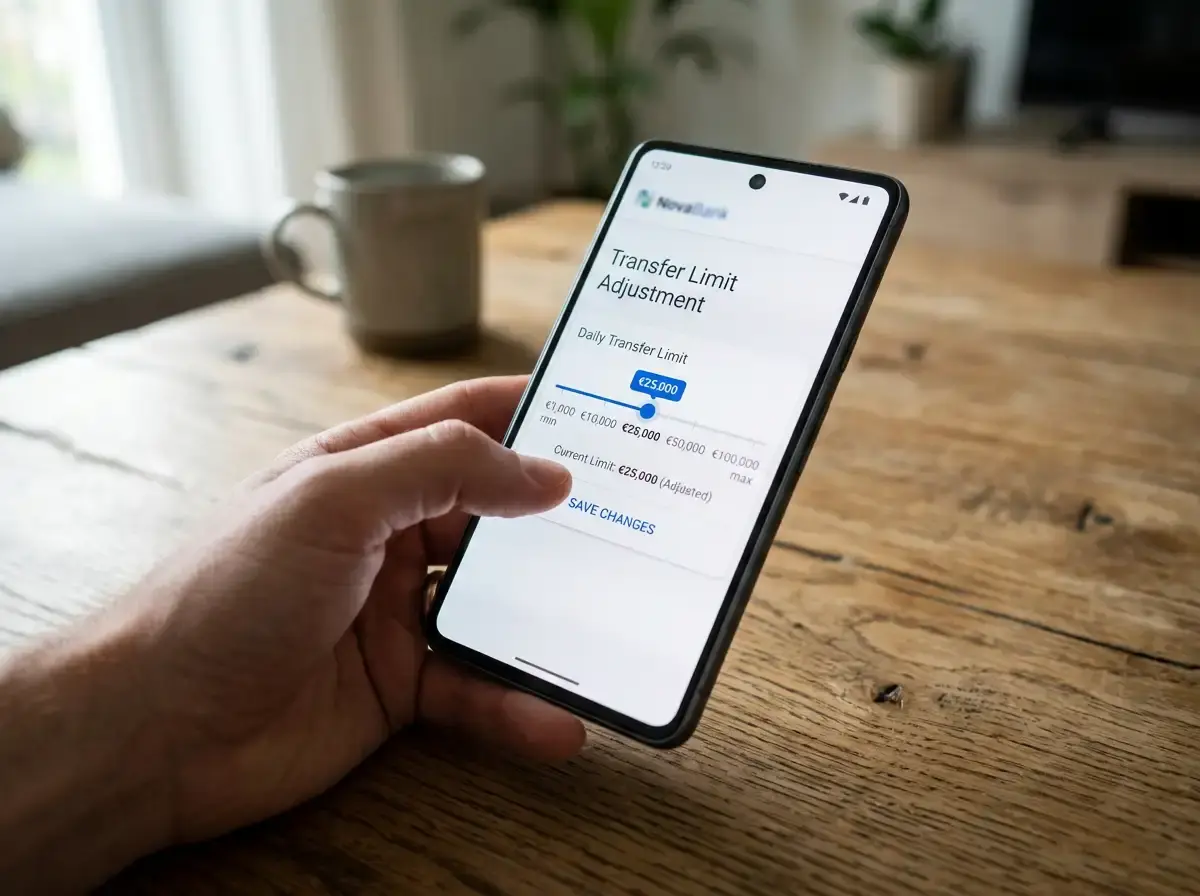
Most Australian banks allow you to set daily or weekly transfer caps within their mobile app. These limits apply to all outbound PayID transfers, not just gambling-related ones, so you need to set the cap high enough to cover your normal bill payments and peer-to-peer transfers while still constraining discretionary gambling deposits. The mechanics vary by bank: some let you set a blanket PayID daily cap, others allow per-recipient limits, and a few offer scheduled limits that tighten on weekends or evenings when impulsive deposits are most common.
The key behavioural principle is that a limit set in advance, when you are thinking clearly, acts as a decision made by your rational self that your impulsive self cannot override in the moment. Changing a bank-level limit typically requires a cooling-off period — 24 to 48 hours before the increase takes effect — which means raising the cap during a session is not possible. That delay is the entire point. Among weekly gamblers, who make up 38% of Australian adults, the gap between intention and action is where most harm-reduction strategies need to operate.
One practical tip: set the limit on a Sunday evening for the coming week, based on a specific budget you have decided on. Review the previous week’s deposits first. If you find yourself hitting the cap regularly and wanting to raise it, that pattern itself is useful information. It does not necessarily indicate a problem, but it indicates a gap between your planned spend and your actual spending impulse that deserves attention.
Casino-Side Tools: Loss Limits, Session Timers, Reality Checks
I once activated a session timer at a casino just to see what it did. Every 60 minutes, a pop-up appeared telling me how long I had been playing and how much I had deposited, won, and lost during the session. The first time the pop-up appeared, I had been playing for an hour but would have guessed 20 minutes. Time distortion during gambling is well-documented, and the session timer broke through it in a way that was genuinely useful.
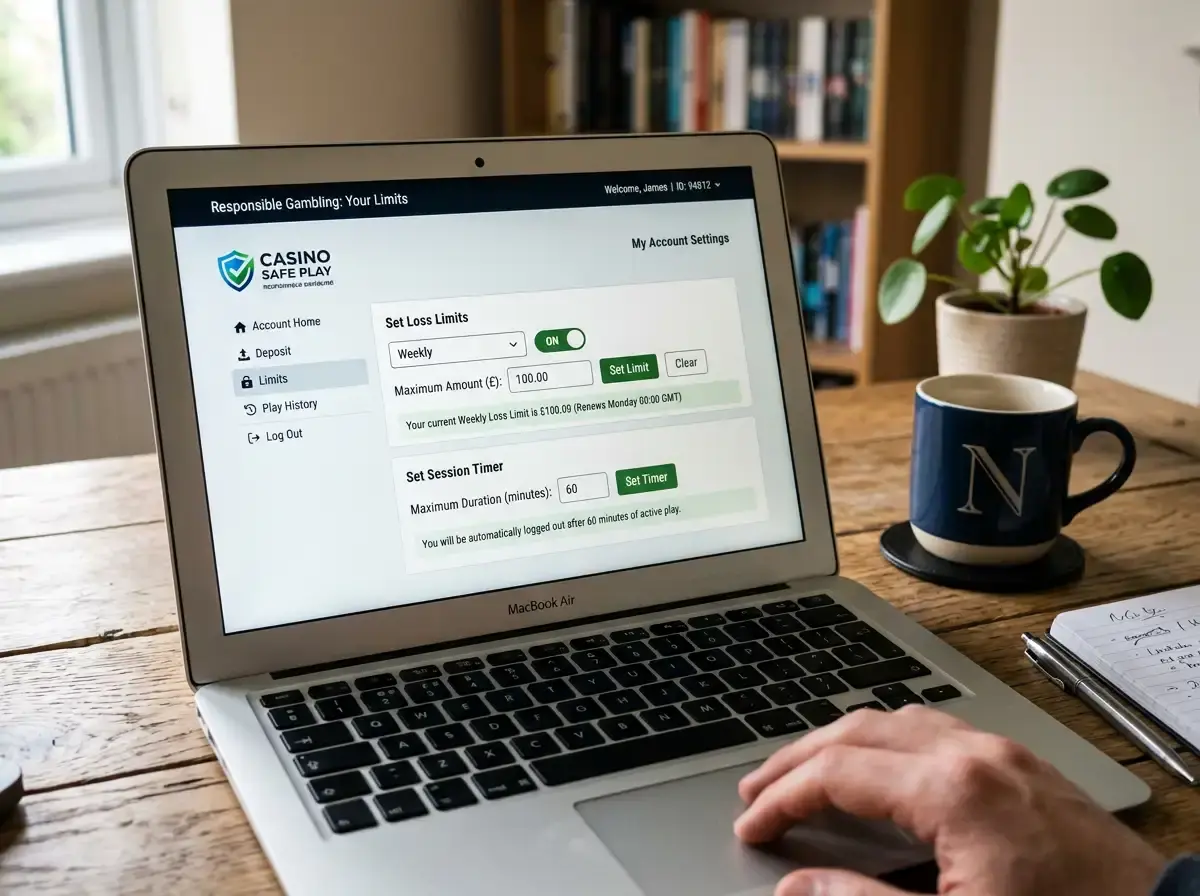
Offshore casinos licensed in reputable jurisdictions typically offer three tiers of self-management tools. Deposit limits cap how much you can deposit within a day, week, or month — separate from your bank-side limits. Loss limits cap net losses over a defined period. Session timers or reality checks interrupt play at intervals you set, forcing a conscious decision to continue rather than allowing passive continuation.
The Australian government’s commitment to addressing gambling harm is backed by AU$112.7 million allocated over five years starting from the 2025-26 budget, directed at the “Addressing Online Gambling Harms” programme. Part of this investment targets improved harm-reduction tools and research into effective intervention points. For players at offshore casinos, the practical tools available today are the ones the casino itself provides, and these vary significantly in quality and configurability.

Some casinos let you set a loss limit of A$50 per week with genuine enforcement — once hit, the account locks until the next period. Others offer “soft” limits that trigger a warning but allow you to dismiss it and keep playing. The difference matters enormously. Before depositing at any casino via PayID, check whether the responsible gambling tools include hard locks or just notifications. A tool you can dismiss in the moment is not a tool; it is a suggestion.
Combining casino-side limits with bank-side limits creates a dual-barrier system. If you set a A$200 weekly deposit cap at your bank and a A$150 weekly deposit limit at the casino, the binding constraint is A$150. If you raise the casino-side limit (which often takes effect immediately or within 24 hours), the bank-side cap still holds at A$200. Layering these limits so they reinforce each other is more effective than relying on either alone.
Cooling-Off Periods and Temporary Account Freezes
After a particularly bad session in early 2025, I tested the cooling-off function at two different casinos. At the first, I activated a 72-hour cooling-off period through the account settings. My account was immediately locked — no deposits, no bets, no withdrawals for three days. At the second casino, the same feature required me to contact support via live chat, explain my request, and wait for manual activation. The first approach is dramatically more effective because it removes the friction of asking another person to help you stop.

Cooling-off periods are shorter and less formal than self-exclusion. They typically range from 24 hours to 30 days and serve as a circuit breaker rather than a long-term commitment. The intention is different from BetStop or full self-exclusion registration: a cooling-off period is for the player who needs a break, not necessarily someone deciding to quit. It is the difference between pausing a film and leaving the cinema.
During a cooling-off period, your casino balance remains intact. You cannot deposit, bet, or withdraw, but your funds are not confiscated. When the period ends, your account reactivates automatically unless you have requested an extension or upgraded to full self-exclusion. Some casinos allow you to set a recurring cooling-off schedule — for instance, automatic 48-hour locks every Monday and Tuesday, creating structured days off from gambling.
The PayID-specific angle here is that a cooling-off period at the casino does not stop you from depositing at a different casino. If you have accounts at multiple offshore operators, a cooling-off at one simply redirects the impulse to another. Bank-level limits and gambling blocks are the only controls that work across all destinations. For a cooling-off to be genuinely effective as a harm-reduction tool, it either needs to cover all your active casino accounts simultaneously or be paired with a bank-side restriction that prevents new deposits to any gambling recipient.
Support Resources for Australian Gamblers
The hardest part of writing about responsible gambling tools is knowing that the people who most need them are often the least likely to seek them out. Every measure described in this article — bank limits, casino tools, cooling-off periods — requires the player to take proactive steps while they are still in a rational frame of mind. For those who have moved beyond self-management, professional support exists and is accessible.

Gambling Help Online is Australia’s national counselling service, available 24/7 via phone at 1800 858 858, through online chat, and via email. The service is free, confidential, and staffed by trained counsellors who specialise in gambling harm. State and territory services complement the national line — Gambler’s Help in Victoria, Gambling Help NSW, and equivalent services across every state and territory.
Polling consistently shows that 77% of Australians believe there are too many opportunities to gamble. That figure reflects a population-level awareness that the environment itself is part of the problem, not just individual behaviour. Support services operate within that context, addressing both the personal and environmental factors that contribute to gambling harm.
Financial counselling is another underused resource. The National Debt Helpline (1800 007 007) provides free financial counselling that includes gambling-related debt. If PayID deposits have contributed to financial stress, a financial counsellor can help structure a recovery plan, negotiate with creditors, and establish banking controls that prevent further damage. These services exist specifically for situations where gambling spending has exceeded what the player can manage alone.
Building Friction Into a Frictionless System
PayID was designed to remove friction from payments. That is its purpose and its strength. In a gambling context, removing friction is a double-edged proposition — it makes legitimate deposits seamless, but it also removes the natural pause points that slower payment methods provide. Every tool discussed in this article is essentially a way of adding deliberate friction back into the process: bank limits that cap daily transfers, casino tools that interrupt sessions, cooling-off periods that lock accounts temporarily, and support services that provide external perspective.

The goal is not to make depositing difficult. The goal is to make depositing deliberate. A A$50 PayID transfer that you planned as part of a weekly budget is very different from a A$50 PayID transfer made at 2am after three losing sessions. The mechanics are identical; the context is not. The tools exist to ensure that the context — your intentions, your budget, your state of mind — stays visible even when the transaction itself is effortless.