


I spent an evening last year methodically cataloguing every table game variant at five offshore casinos that accept PayID deposits from Australians. The total count surprised me — over 200 distinct titles across the five platforms. Most were variations on three core games — blackjack, roulette, and baccarat — but the range of rule tweaks, side bets, and interface designs meant each variant played differently enough to warrant its own understanding. Table games are not a monolith, and the choice of which to play has a more measurable impact on your bankroll than the choice of which pokie to spin.
The Australian online gambling market, valued at USD 5.5 billion in 2025, supports a robust table game ecosystem at offshore casinos. While pokies dominate deposit volume, table games attract a player segment that values skill-based decisions, lower house edges, and longer session times per dollar deposited. PayID’s instant funding is particularly useful for table game players who prefer to deposit session-appropriate amounts rather than maintaining a large persistent balance.
Game Categories and What Each Offers
Blackjack sits at the top for players who want to influence the outcome through decisions. The base game is simple — get closer to 21 than the dealer without going over — but the decision tree of when to hit, stand, split, or double creates genuine strategic depth. Standard blackjack at offshore casinos follows Vegas strip rules or European rules, with minor variations in dealer standing on soft 17, number of decks, and available side bets. Speed blackjack and infinite blackjack variants cater to players who want faster hands or always-available seats.
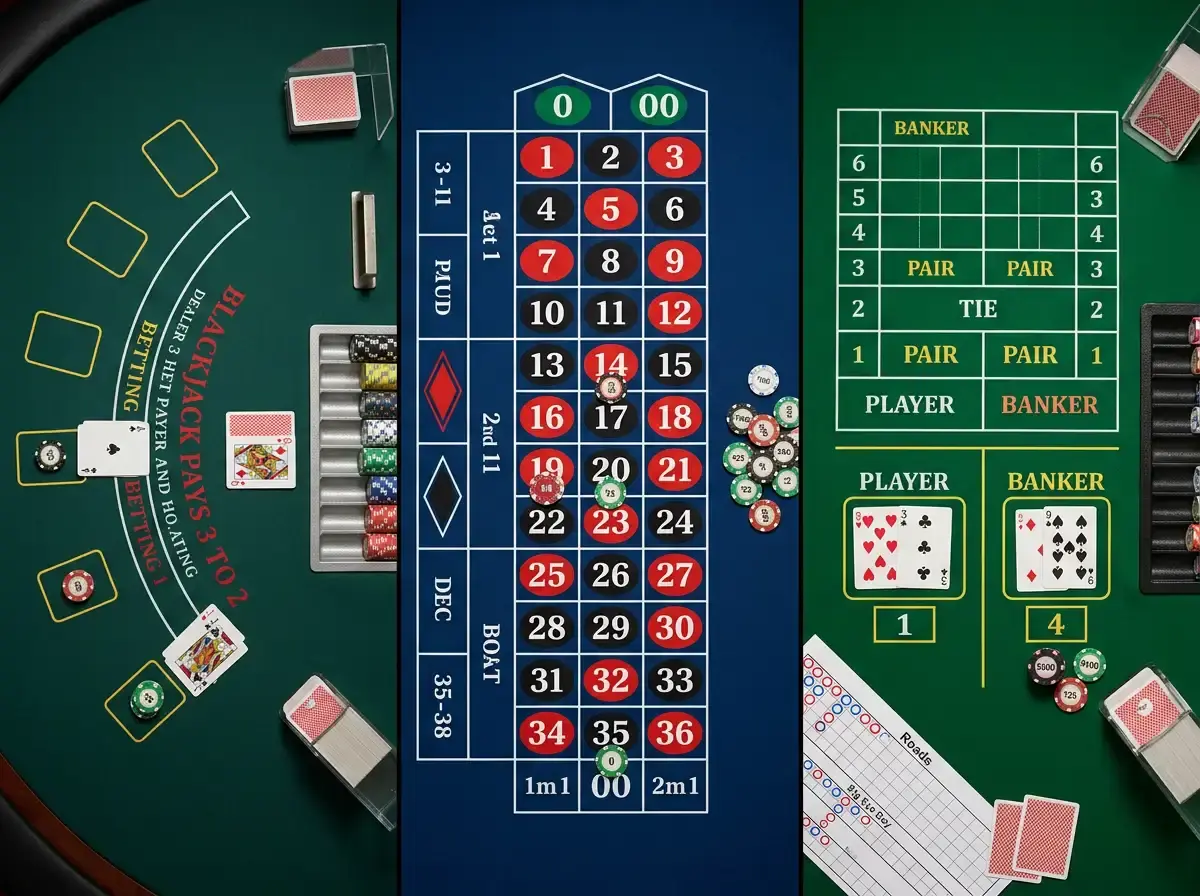
Roulette is the polar opposite in terms of player agency. Every bet has the same house edge regardless of strategy (with one exception I will cover), and the game’s appeal lies in its betting variety rather than decision-making. European roulette with a single zero, American roulette with double zero, and French roulette with la partage all appear at PayID casinos. Lightning roulette and multiplier variants add random payout multipliers to straight-up bets, creating higher variance without changing the underlying probability structure.
Baccarat is the third pillar, particularly popular with players of Asian heritage who make up a significant segment of the offshore casino market. The game involves virtually no player decisions beyond choosing banker, player, or tie — the draw rules are fixed. Its appeal is in the low house edge on banker bets and the fast pace of play. No-commission baccarat eliminates the 5% commission on winning banker bets by modifying the payout structure, and squeeze baccarat adds a theatrical reveal element to the card dealing.
House Edge Comparison: Blackjack vs Roulette vs Baccarat
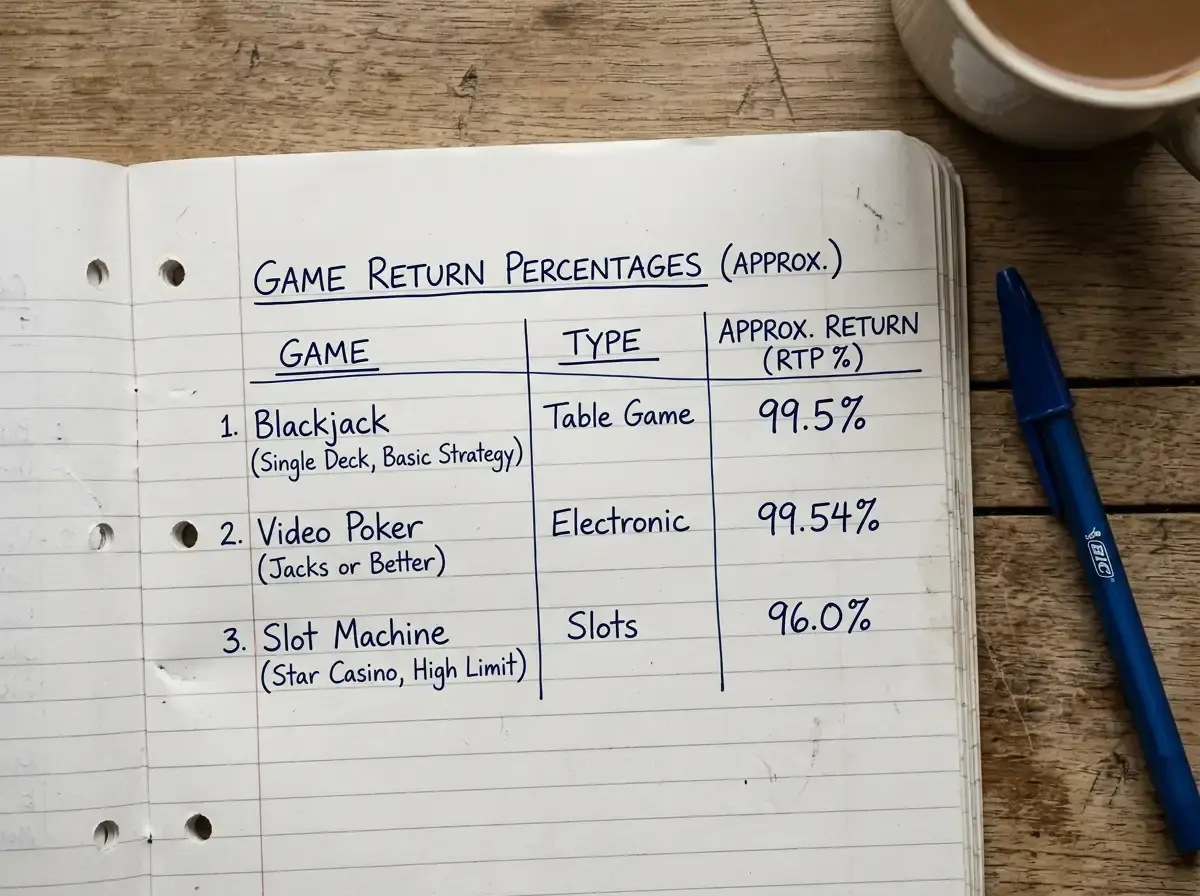
I ran the numbers across standard rule sets to give a direct comparison. Blackjack with basic strategy — the mathematically optimal decision at every hand — carries a house edge of roughly 0.4% to 0.6% depending on the specific rule variant. This is the lowest house edge available at any casino game, but it requires the player to learn and consistently apply basic strategy. Deviating from optimal play pushes the edge significantly higher.
European roulette has a fixed house edge of 2.7% on every bet except the en prison or la partage rules, which reduce the edge on even-money bets to 1.35%. American roulette, with its additional double-zero pocket, carries a 5.26% edge — more than double the European version. The choice between European and American roulette is the single most impactful decision a roulette player can make, yet many players do not check which variant they are playing.
Baccarat’s banker bet carries a house edge of 1.06% after accounting for the 5% commission, while the player bet sits at 1.24%. The tie bet, at 14.36%, is the worst regular wager available at a standard table game and should be ignored by anyone paying attention to the mathematics. For players who want a low house edge without learning strategy, the baccarat banker bet is the strongest option available.

RNG Tables vs Live Dealer: Differences That Matter
Random number generator tables — the software-driven versions with animated cards and wheels — and live dealer tables coexist at every PayID casino I have examined. The mathematical outcomes are identical; both use certified random systems and produce results within the published house edge ranges. The differences are in pace, minimums, and experience.
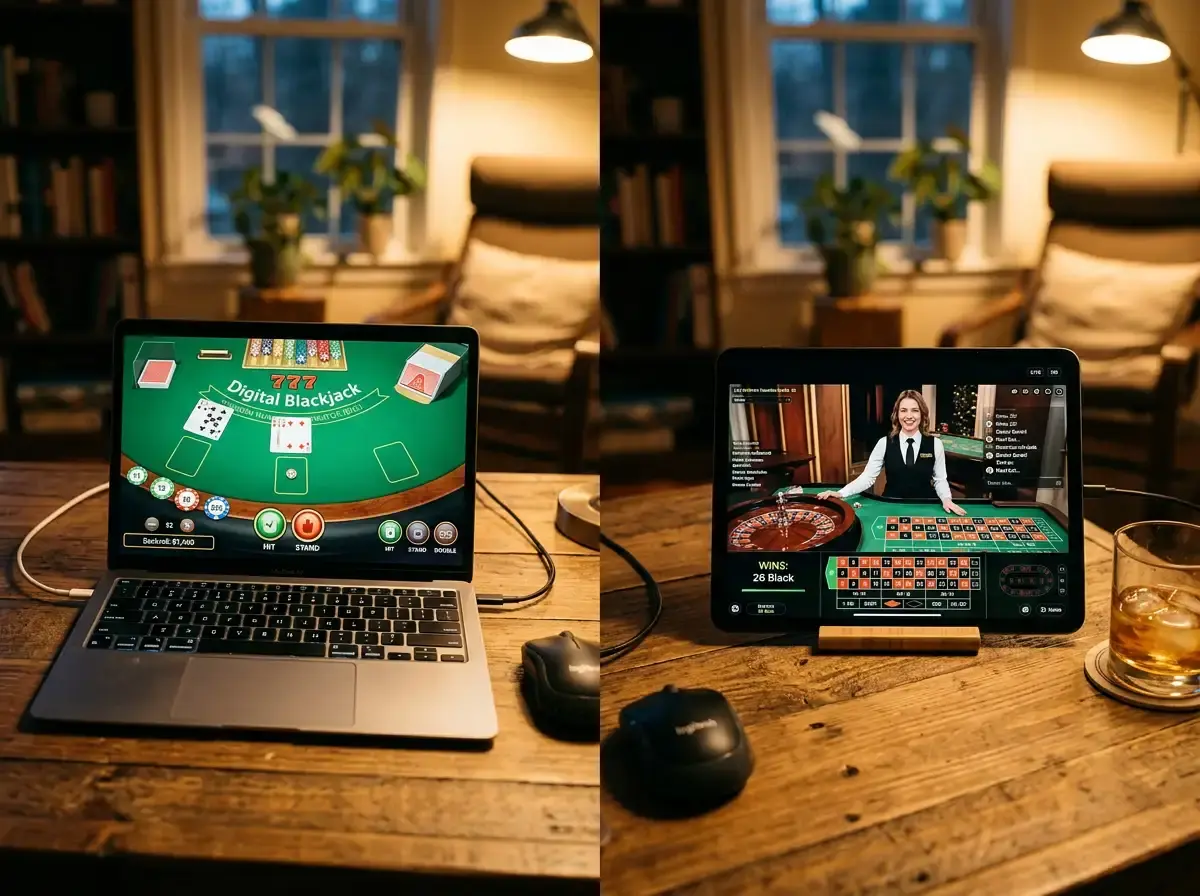
RNG blackjack hands resolve in 10 to 15 seconds, compared to 45 to 60 seconds at a live table. This means you play roughly four times as many hands per hour at an RNG table, which compresses your bankroll lifecycle. A A$200 bankroll at a A$5 minimum RNG table sees four times the action per hour as the same bankroll at a live table, meaning you reach your expected loss faster. For players who want to stretch a session, live tables are the better format.
Minimums at RNG tables are typically lower — A$0.50 to A$1 per hand — making them accessible to minimum-deposit players. Live tables start at A$5 to A$10 for blackjack and A$1 for roulette. If you are depositing A$20 to A$50 via PayID for a casual session, RNG tables give you more runway. If you are depositing A$200 or more and want a social, immersive experience, live tables justify the higher minimums.
How Instant PayID Deposits Change Your Table Game Routine
The operational difference PayID makes for table games is in session management. NPP handles roughly 2 billion transactions annually, and the same real-time settlement that powers everyday banking enables a deposit-per-session approach to table game play. Rather than maintaining a large balance at the casino, you deposit what you intend to play with for that session and nothing more. If the session goes well and you want to continue, a top-up takes seconds. If the session depletes your bankroll, the deliberate act of making another PayID transfer forces a conscious decision about whether to continue — a natural pause point that a pre-loaded balance does not provide.

For blackjack players in particular, session-based deposits align well with the game’s inherent volatility. A bad run of ten hands at a A$10 table costs A$100, which might deplete a conservative session bankroll. The question of whether to reload is better answered after a pause — checking your banking app, seeing your day’s total deposits, deciding deliberately — than in the heat of a losing streak. PayID’s speed removes the friction from reloading while the act of reloading preserves the friction of the decision. That is a useful balance for any table game player managing their bankroll with discipline.