


The first time I watched a PayID deposit land in a casino balance, I assumed the casino was just fast at processing. It took me a while to understand that the speed had nothing to do with the casino and everything to do with the rails underneath. The New Payments Platform — NPP — is the infrastructure that makes “instant” actually instant, processing 155 million transactions every month across the entire Australian banking system. When you send money to a casino via PayID, you are riding the same real-time settlement network that processes salary payments, business invoices, and peer-to-peer transfers. The casino is just another endpoint on a national system that was built for exactly this kind of speed.
NPP Architecture: How Real-Time Settlement Works
I spent a weekend reading through AP+ technical documentation to understand what actually happens during a real-time payment. The architecture is more elegant than most people realise, and it explains both the speed and the reliability that casino depositors depend on.
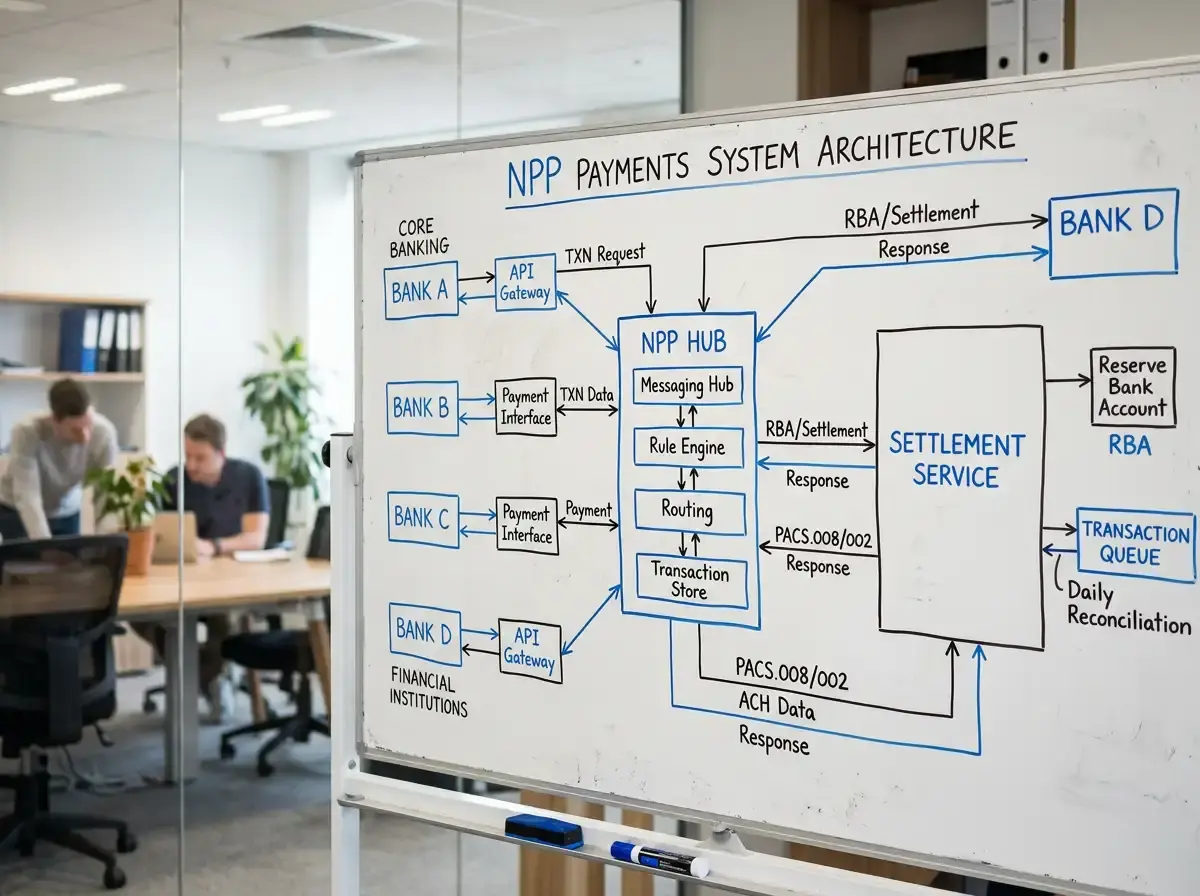
NPP is a centralised switching hub that connects participating financial institutions through a single messaging layer. When you initiate a PayID transfer in your banking app, your bank sends an ISO 20022 payment message — a rich-data format that carries more information than the old payment standards — to the NPP central infrastructure. The hub identifies the recipient’s bank through the PayID directory, routes the message, and the receiving bank credits the recipient’s account. The entire message-route-credit cycle completes in under a second for most transactions.
The critical architectural decision was real-time gross settlement via the Reserve Bank of Australia’s Fast Settlement Service. Unlike batch systems that accumulate transactions and settle them in bulk at the end of the day, NPP settles each payment individually at the moment it occurs. When your A$100 deposit to a casino clears, it has genuinely moved from your bank’s settlement account to the casino’s bank’s settlement account at the RBA. There is no pending period, no provisional credit, no risk of reversal due to batch settlement failure. The money has moved.

In 2024, NPP processed 1.6 billion transactions worth AUD 1.99 trillion — a 23% increase over 2023. By 2025, volume crossed the 2 billion mark. These are not small numbers. The platform handles roughly one-third of all interbank transfers in Australia, and its share is growing as the older Bulk Electronic Clearing System loses ground. For casino deposits specifically, the real-time settlement means the casino sees confirmed funds, not a promise of funds. That confirmation is what triggers the instant balance credit on the player’s end.
The 24/7/365 availability is another architectural feature that matters. BECS processes in overnight batches, meaning a Friday afternoon transfer might not settle until Monday. NPP processes on Christmas Day, at 3am on a Tuesday, and every moment in between. Casino players are not a nine-to-five demographic. The infrastructure matches the usage pattern.
OSKO vs PayID: Two Layers of the Same System
A question I get asked repeatedly: what is the difference between OSKO, PayID, and NPP? I have seen these terms used interchangeably on casino review sites, and the confusion is understandable because they all describe aspects of the same system. But they are distinct layers, and understanding the distinction clarifies what is actually happening when your deposit goes through.
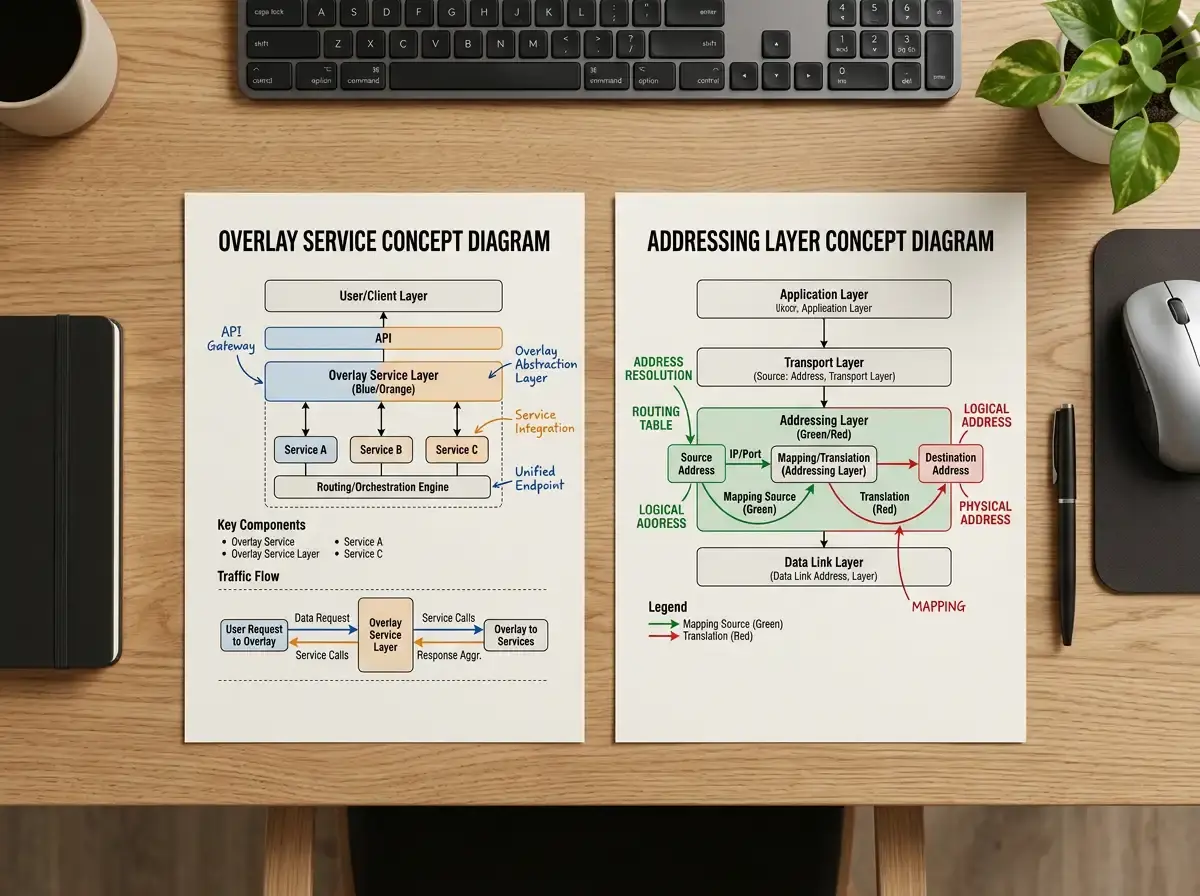
NPP is the infrastructure — the pipes. It is the clearing and settlement platform operated by Australian Payments Plus. Every real-time payment flows through NPP, regardless of how it was initiated. Think of it as the motorway.
OSKO is a payment service — an overlay — that runs on NPP. It was the first commercial overlay service built on the platform, enabling consumers and businesses to send real-time payments through their banks. When you make a “fast payment” or “instant transfer” in your banking app, you are using OSKO whether or not the app labels it that way. OSKO is the vehicle on the motorway.
PayID is an addressing service within the NPP ecosystem. Instead of providing a BSB and account number, you give a PayID — an email address or phone number — that maps to your bank account in a central directory. PayID is the navigation system that tells the vehicle where to go. You can make an NPP payment without using PayID (by entering BSB and account number directly), but you cannot use PayID without NPP. Every PayID payment is an NPP payment; not every NPP payment uses PayID.
For casino deposits, the distinction matters because some casinos accept NPP payments via BSB/account number but do not have a registered PayID. Others have a PayID and accept transfers to their email or phone identifier. The underlying settlement speed is identical either way — the payment travels the same NPP rails. The difference is in addressing convenience and, increasingly, in the transaction tracking and limits that banks apply based on the payment method used.
How Casinos Integrate With NPP Rails
I once asked the support team at an offshore casino how they received PayID deposits. The answer was surprisingly straightforward: they hold an Australian bank account. The casino — or more precisely, its payment processor — maintains an account at an Australian financial institution that participates in NPP. When you send a PayID transfer, it arrives in that Australian account like any other domestic payment. The processor then credits your casino balance through an internal API call.

This architecture explains several things. It explains why PayID deposits are genuinely fee-free for players — the wholesale cost of an NPP transaction dropped from $0.39 in 2019 to approximately $0.04 in FY25, a cost so low that neither the bank nor the casino’s processor bothers passing it on. It explains why deposits are near-instant — the NPP settlement is real-time, and the processor-to-casino API call adds at most a few seconds. And it explains why some casinos can offer PayID while others cannot — the casino needs a payment processor with an Australian banking relationship, which is not trivial to establish for offshore entities.
The processor acts as a bridge. It holds the Australian bank account, receives NPP payments, reconciles them against player accounts using reference codes or PayID name matching, and pushes balance updates to the casino’s platform. Different processors have different reconciliation speeds, which is why a deposit at one casino might credit in 10 seconds while the same amount at a different casino takes two minutes. Both are using NPP; the variable is the processor’s internal pipeline.
NPP now handles more than 30% of all interbank transfers in Australia. For casino payment processors, this volume share means NPP is no longer an alternative channel — it is the primary channel for Australian player deposits, especially after the credit card ban removed card-based options from the equation.
The BECS Sunset and What It Means for Casino Banking
The Bulk Electronic Clearing System has processed Australian payments since the 1990s. It is the system behind traditional bank transfers — the ones that take one to three business days because they settle in overnight batches. BECS is scheduled for retirement by 2030, with all its transaction volume migrating to NPP. For casino players, this transition is largely invisible because anyone using PayID is already on NPP. But the BECS sunset has broader implications for the payment ecosystem around online gambling.
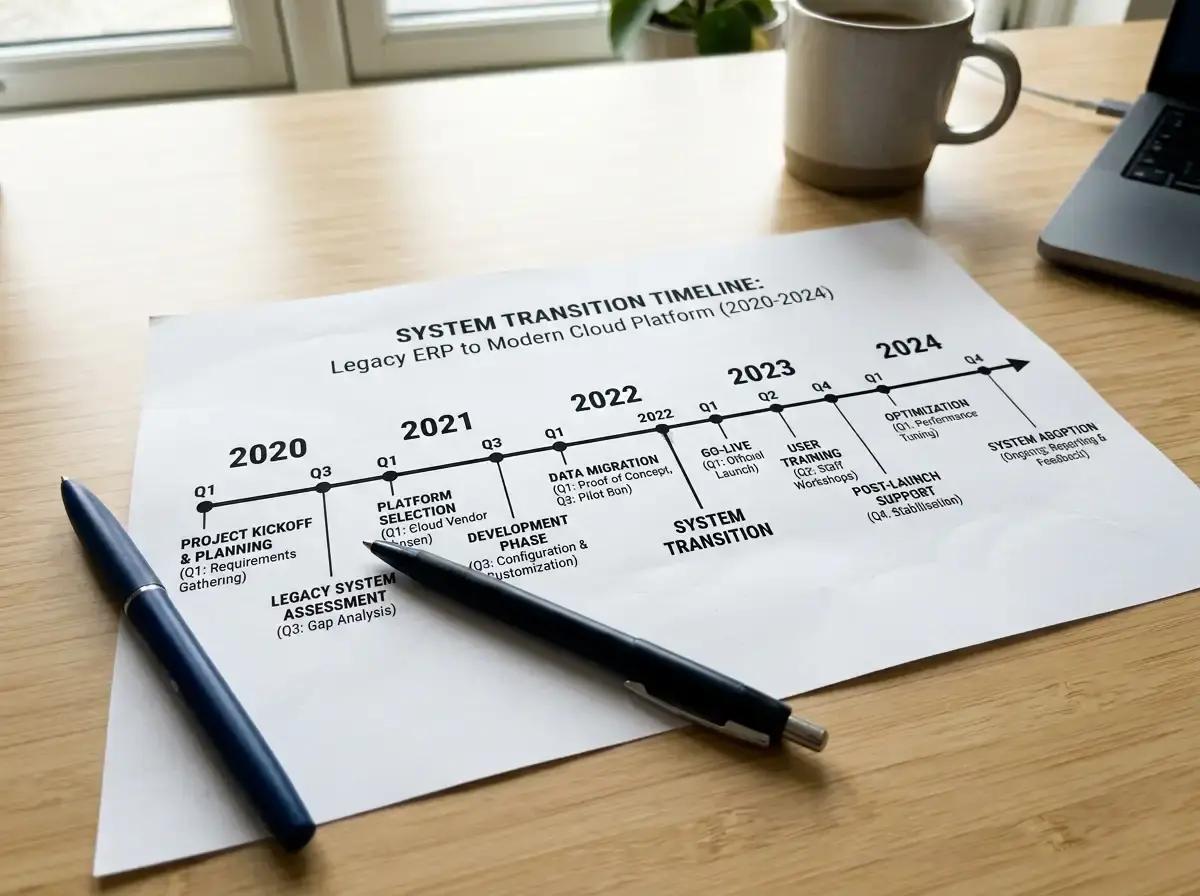
Casinos that still accept “standard bank transfers” — the slow kind — are routing through BECS. When BECS retires, those transfers will either migrate to NPP or cease to exist as an option. The practical effect is that the distinction between “instant transfer” and “standard bank transfer” at casino cashiers will disappear. Every bank transfer will be an NPP transfer, which means every bank transfer will be fast. The tiered cashier experience where PayID sits in a premium “instant” category and standard bank transfers sit in a “1-3 days” category will collapse into a single method.
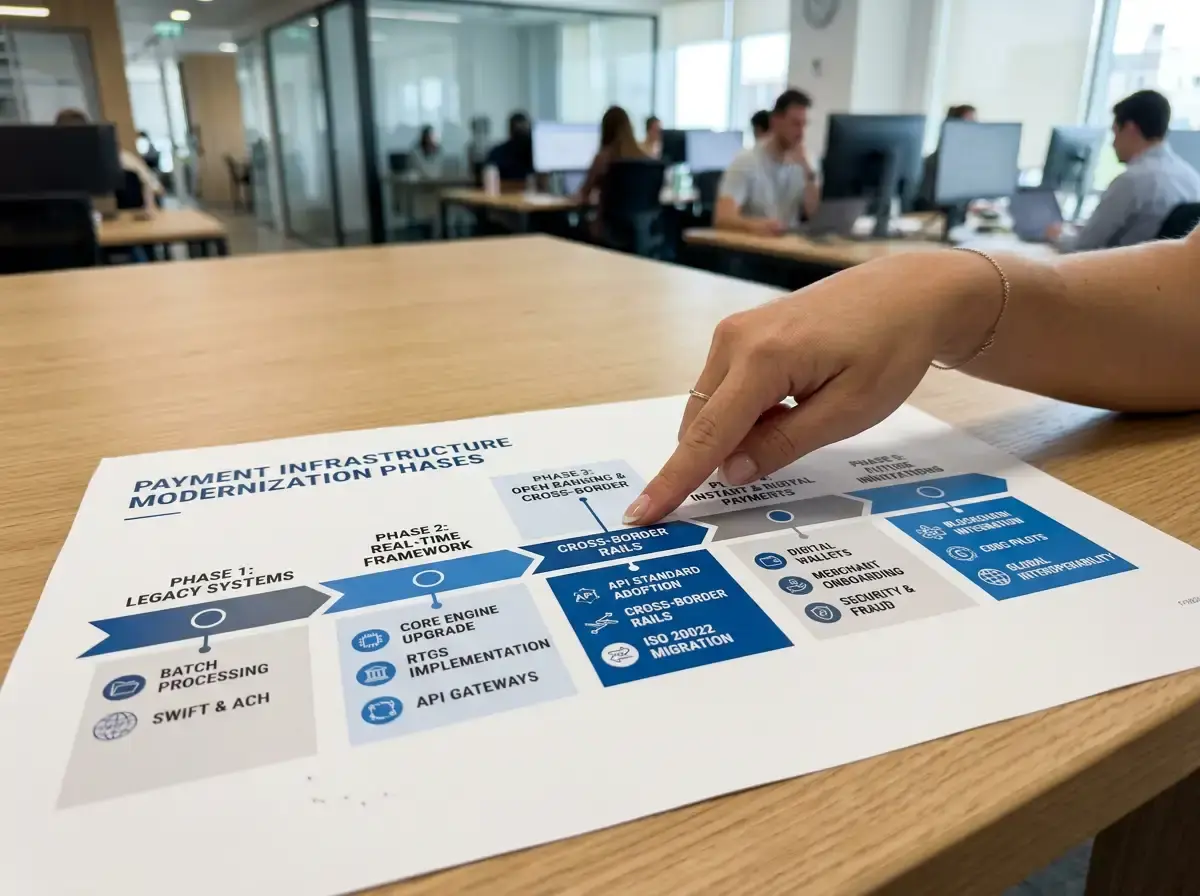
For the payment processors serving offshore casinos, the BECS sunset also means they need to fully support NPP settlement, including its richer messaging format and real-time reconciliation requirements. Processors still relying on BECS batch processing for any portion of their Australian transaction handling will need to upgrade before the 2030 deadline. This modernisation should improve reliability and transparency for players, as NPP’s detailed transaction messaging provides better data for reconciliation and dispute resolution than BECS ever could.
Why the Plumbing Matters More Than the Brand Name
Casino sites like to market “instant PayID deposits” as if the speed is their feature. It is not. The speed belongs to NPP — a national infrastructure investment maintained by Australian Payments Plus and backed by the Reserve Bank of Australia. The casino’s contribution is having a payment processor with an Australian bank account connected to that infrastructure. Understanding this distinction matters because it sets accurate expectations: the deposit speed is a function of the banking system, not the casino’s technology. If a deposit is slow, the delay is almost certainly at the processor level, not in the NPP settlement itself. The infrastructure does its job in under a second. Everything after that is operational overhead.