


A friend of mine registered with BetStop on a Tuesday night after a bad run. By Wednesday morning, his accounts at three licensed Australian bookmakers were frozen. He felt relieved — until he realised that the offshore casino where he had been depositing via PayID was still sending him promotional emails and accepting logins without any interruption. BetStop had done exactly what it promised: blocked him from licensed domestic operators. It had not touched the unlicensed offshore sites, because it cannot. That gap between expectation and reality is the most important thing to understand about Australia’s self-exclusion system.
Since its launch in August 2023, 49,382 Australians have registered with BetStop. Of those, 31,838 had active exclusions as of September 2025. These are real numbers representing real people making a deliberate decision to step back from gambling. The system works within its jurisdiction. The question is what happens outside that jurisdiction, particularly at the offshore PayID casinos that most Australian online players actually use.
How BetStop Registration and Enforcement Work
I walked through the BetStop registration process myself to understand the mechanics. It takes about ten minutes. You visit the BetStop website, verify your identity through myGovID or a document upload, choose your exclusion period, and confirm. The system then notifies every licensed Australian gambling operator — bookmakers, online wagering services, and licensed casinos — to close your active accounts and reject new registrations under your identity details.
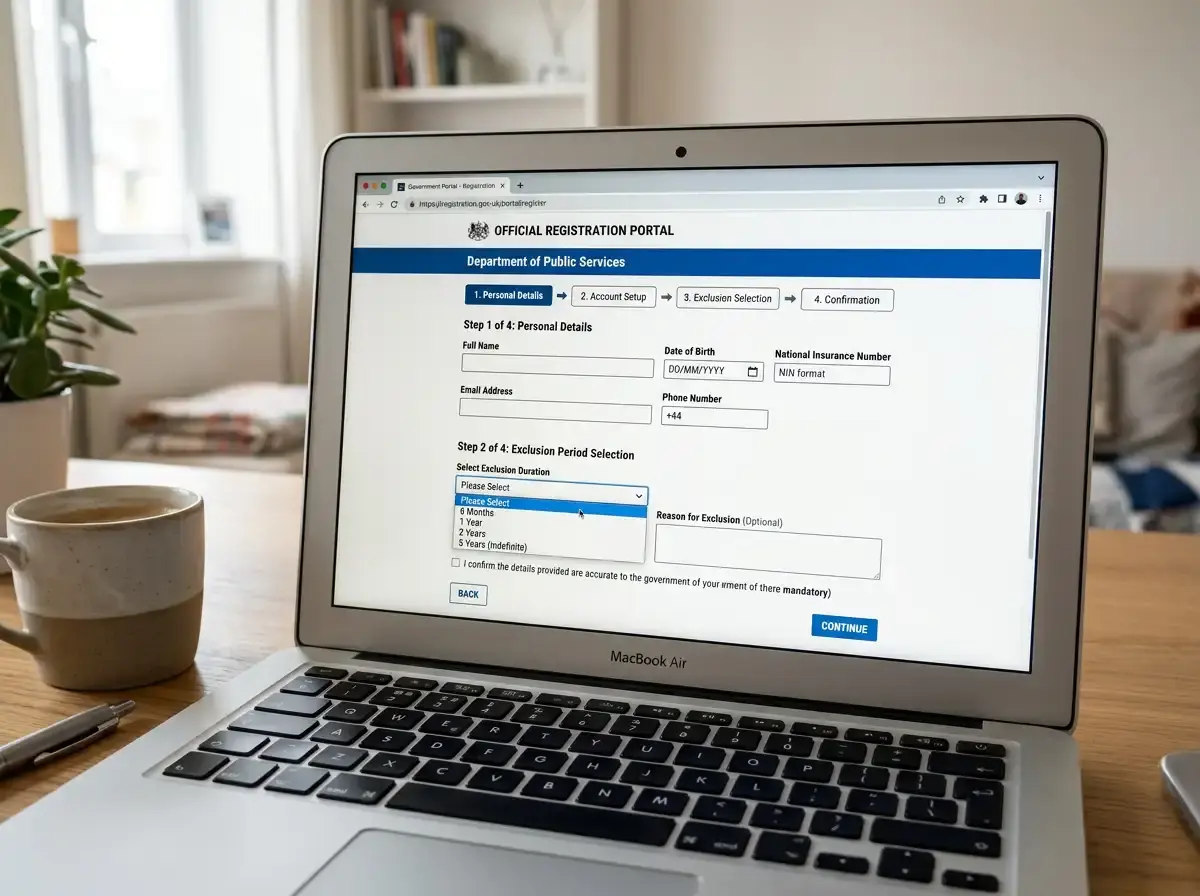
The exclusion periods range from a minimum of three months to lifetime. Among those who have registered, 39% chose lifetime self-exclusion — a permanent opt-out with no reversal mechanism. Another 39% selected periods between three months and two years. The remainder chose intermediate terms. These choices are binding for the selected duration; you cannot contact BetStop and reverse a three-month exclusion after two weeks because you changed your mind. The minimum cooling-off applies regardless, by design.
Enforcement is straightforward for licensed operators. ACMA oversees compliance, and licensed providers face penalties for allowing a BetStop-registered person to place bets. The technical integration uses identity-matching systems that cross-reference your name, date of birth, and address against the register. When a licensed bookmaker receives a new account application or processes a login, the system checks BetStop in near real time. Matches trigger an automatic block. By June 2025, 30,032 people had active exclusions, and 14,809 had either completed their exclusion period or cancelled early — though early cancellation is only available after the minimum period lapses.

The system also covers marketing. Licensed operators must suppress all promotional communications to BetStop-registered individuals. No emails, no SMS offers, no push notifications. This marketing suppression is often the most immediately noticeable effect of registration — the silence after months or years of promotional noise.
The Offshore Gap: Why PayID Casinos May Not Check BetStop
Here is where it gets complicated, and where I think people deserve a clearer explanation than they usually receive. Offshore casinos — the ones licensed in Curacao, Malta, Gibraltar, or similar jurisdictions — are not Australian licensees. They are not required to integrate with BetStop, and as far as I can determine, none of them have voluntarily done so. ACMA has blocked 1,708 illegal gambling websites and affiliate sites as of May 2026, and more than 230 illegal operators have voluntarily withdrawn from the Australian market since 2017. But website blocking is a different enforcement mechanism from self-exclusion integration.

When you register with BetStop and then deposit via PayID at an offshore casino, the casino does not receive any signal from BetStop. Your PayID transfer arrives like any other deposit — instantly, with your bank-verified name attached, and no flag indicating self-exclusion status. The casino has no obligation and no technical pathway to check the Australian register. This is not a loophole that someone overlooked; it is a structural limitation of a domestic register applied to an international market.
The implication for players who register with BetStop seeking a complete barrier is significant. BetStop works as intended within the licensed Australian market, covering domestic bookmakers and any future licensed online casino operators. It does not extend to the offshore sector where PayID deposits are most commonly used for casino play. Understanding this boundary is essential before relying on BetStop as a sole self-exclusion measure.
Communications Minister Anika Wells framed the broader regulatory ambition clearly when announcing the gambling advertising reforms: from January next year, Australians would be able to watch sport without being saturated by gambling promotion, and the government was treating gambling addiction as a serious public health concern. That framing reflects genuine policy commitment, but the offshore enforcement challenge remains structurally unresolved for self-exclusion specifically.
Bank-Level Self-Exclusion Tools That Complement BetStop
After watching my friend’s BetStop registration fail to cover his offshore activity, I started looking at what the banks themselves offer. This turned out to be the more practical layer of protection for PayID casino deposits, and it is underutilised.
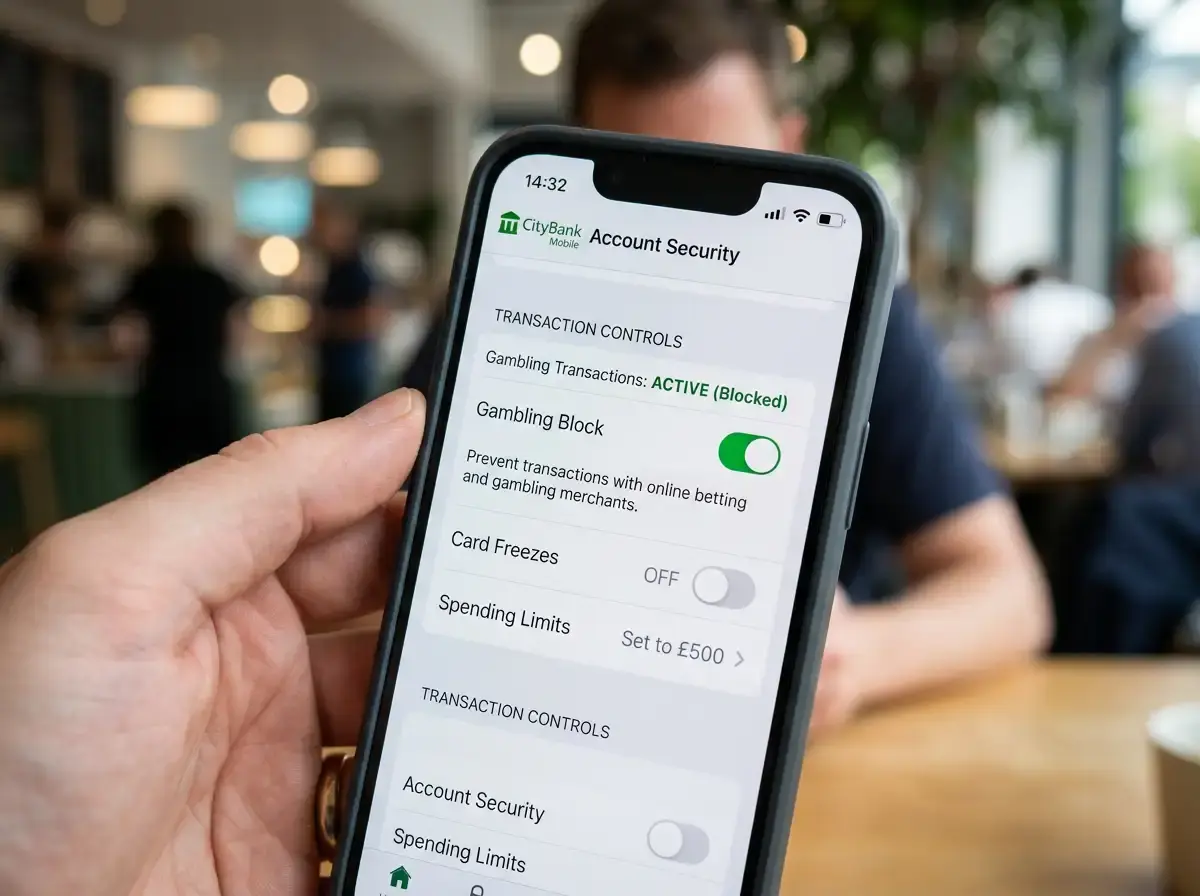
Several Australian banks now provide gambling-specific transaction blocks within their mobile banking apps. CommBank introduced a feature allowing customers to block outbound transactions to gambling merchants. NAB, ANZ, and Westpac have followed with similar tools, though the implementation details vary. These blocks operate at the transaction level — when you attempt a PayID transfer to a recipient categorised as a gambling service, the bank declines the transfer before it reaches NPP processing.
The effectiveness depends on categorisation. Banks maintain merchant category databases, and a PayID recipient only gets blocked if it has been flagged as a gambling entity. Offshore casinos that use generic business names or intermediary payment processors may not appear in the gambling category, which means the block does not catch every possible transfer. It is a filter, not a wall — but it catches the majority of direct deposits to known gambling PayIDs.
Combining BetStop with a bank-level gambling block creates two layers: BetStop covers the licensed domestic market, and the bank block covers a portion of the offshore market. Neither is complete on its own. Together, they reduce the number of available pathways significantly. For someone serious about stepping back from gambling, adding daily transfer limits through the banking app provides a third layer — capping the total amount that can leave the account via PayID in a 24-hour period, regardless of recipient.
Some banks also offer temporary card freezes and scheduled spending reviews, where you receive a weekly summary of gambling-related transactions. These tools exist in the broader context of Australia’s evolving regulatory landscape, where the intersection of banking services and gambling harm reduction is becoming increasingly sophisticated. The AU$112.7 million allocated over five years from 2025-26 for addressing online gambling harms suggests that further bank-level integration with self-exclusion systems is likely coming, though the timeline remains unclear.
What BetStop Covers and What It Cannot
BetStop is effective at exactly what it was designed to do: remove registered individuals from the licensed Australian gambling ecosystem. The register’s nearly 50,000 registrations in just over two years demonstrate real demand for the service. The enforcement mechanism works — licensed operators comply because the penalties for non-compliance are severe and ACMA actively monitors.

Where BetStop cannot reach is the offshore market that operates outside Australian licensing. For players who use PayID to deposit at these casinos, BetStop alone is not sufficient as a self-exclusion tool. The most practical approach combines BetStop registration with bank-level gambling blocks and personal transfer limits. No single system provides a complete barrier, but layering them reduces access points to a minimum. If you or someone you know is considering self-exclusion, starting with BetStop and then activating your bank’s gambling block on the same day closes the widest possible range of pathways in a single session.