


On the morning of 19 August 2024, a credit card deposit to an online gambling account that had worked the night before simply stopped going through. No error message, no gradual phase-out — the ban landed as a hard cutoff. I had been tracking the policy since its announcement and still found the suddenness striking. One day, Visa and Mastercard funded a significant portion of Australian online gambling transactions. The next, they did not. The credit card gambling ban reshaped the entire deposit landscape overnight, and PayID was the primary beneficiary.
The ban applied to all forms of interactive gambling in Australia, covering both licensed domestic operators and, in principle, offshore casinos. Credit cards could no longer be used to fund gambling accounts, period. The policy aimed to sever the link between gambling activity and consumer credit — a link that had been identified as a significant driver of gambling-related financial harm. What the policy could not dictate was where displaced deposits would go. The market answered that question decisively.
What the August 2024 Ban Covers
I read through the legislative instrument when it was gazetted, and the scope is broader than many players initially understood. The ban covers any transaction where a credit card is used to deposit funds into a gambling account. This includes direct credit card deposits through casino or bookmaker cashiers, deposits via e-wallets funded by a credit card, and cash advances from credit cards used to fund gambling. The prohibition sits on the payment provider side — card networks and issuers are required to block the transactions based on merchant category codes associated with gambling.

Card fraud in Australia totalled $854 million in FY25, down slightly from $868 million the previous year, with an overall rate of 71.8 cents per $1,000 spent. The credit card ban was not primarily a fraud-prevention measure, but the broader context of card-related financial risk informed the policy environment. Gambling on credit meant gambling with borrowed money, and the evidence showed that credit-funded gambling was disproportionately associated with problem gambling behaviour.
Debit cards remain permitted. The distinction matters because many Australian bank cards function as both debit and credit depending on the account they are linked to. A debit card funded by your own savings can still deposit to a gambling account. A credit card — or a debit card linked to a line of credit rather than a deposit account — cannot. Some players discovered this distinction the hard way when their dual-function cards were declined because the primary account linkage was a credit facility.

How the Ban Shifted Deposit Method Preferences
Before August 2024, credit cards sat alongside debit cards, bank transfers, e-wallets, and cryptocurrency as standard deposit options at offshore casinos. The split varied by operator, but estimates suggested credit cards accounted for 20% to 35% of deposits from Australian players. When that channel closed, the volume had to go somewhere. The total wagering turnover had hit A$244.3 billion in the 2022-23 year, with online betting alone reaching A$75.4 billion — a 165.7% increase year-on-year. The appetite for online gambling did not diminish with the credit card ban; only the payment method changed.

I monitored cashier pages at a dozen offshore casinos in the weeks following the ban. Within a month, most had moved PayID to the top of their deposit method list, above debit cards and e-wallets. Some casinos that had previously listed PayID as a secondary option promoted it to the featured position with prominent instructions and even deposit bonuses specifically tied to PayID transfers. The signal was clear: casinos recognised where their Australian deposit volume was migrating and adjusted their interfaces to match.
E-wallets absorbed some displaced volume, but faced their own constraints. Players who had been funding e-wallets via credit card found that pathway also blocked, since the ban extended to credit-card-funded intermediaries. Cryptocurrency picked up a smaller share — useful for players who already held crypto, but a high-friction entry point for those who did not. PayID, requiring only a standard Australian bank account and a phone or email, had the lowest friction of any alternative.
PayID as the Primary Beneficiary of the Credit Card Ban
More than 25 million PayIDs were registered in Australia by April 2025, covering the vast majority of the adult population with bank accounts. That existing infrastructure meant the credit card ban did not push players toward an unfamiliar system — it pushed them toward the system they were already using for rent payments, splitting dinner bills, and marketplace purchases. The activation energy was zero. No new account to create, no app to download, no verification process beyond what the bank had already completed.

The structural advantages compounded the convenience. PayID deposits settle in seconds via NPP, matching or exceeding the speed of card deposits. They carry no transaction fees, unlike some card processors that charged 1.5% to 3% on gambling deposits. And they provide name verification through the banking system, reducing the fraud and identity mismatch issues that occasionally plagued card deposits. For casinos, PayID deposits also mean lower processing costs and fewer chargebacks — credit card gambling chargebacks had been a persistent operational headache for offshore operators.
The post-ban period also saw several casinos drop POLi as a deposit option entirely, consolidating their bank-transfer offerings around PayID. POLi’s screen-scraping model — which requires players to enter their banking credentials into a third-party interface — looked increasingly archaic next to PayID’s app-to-app flow. The credit card ban accelerated a consolidation that was already underway, leaving PayID as the dominant bank-transfer method at casinos that previously offered both.
Debit Cards, POLi, and Crypto: What Else Remains
Debit cards remain the second most common deposit method at offshore casinos accepting Australian players. They offer the familiarity of card-based entry — fill in the number, expiry, CVV — and settle within minutes. The trade-off is fees: some casinos pass on a processing surcharge of 1% to 2.5% for card deposits, a cost that PayID avoids entirely. Debit cards also carry a higher decline rate than PayID for gambling transactions, as some banks apply precautionary blocks to card payments flagged under gambling merchant codes.
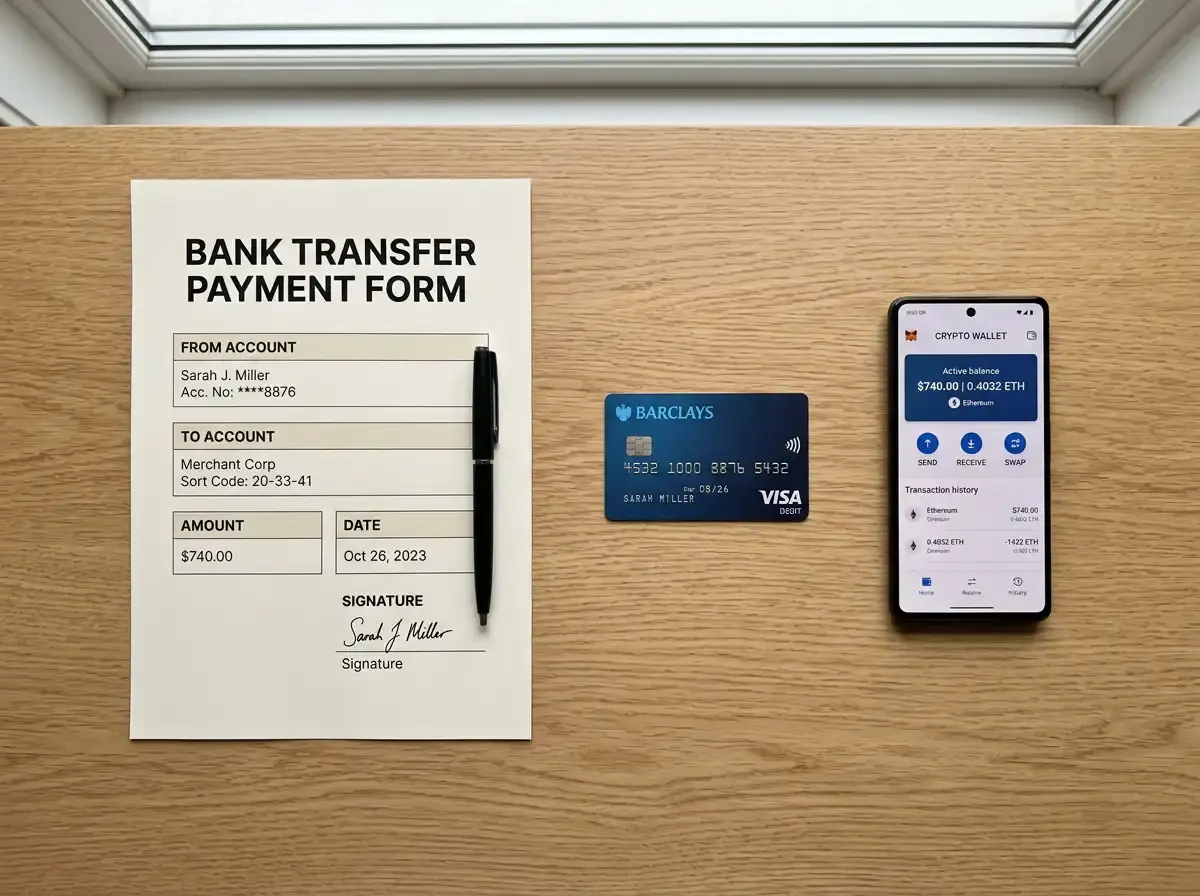
POLi persists at a shrinking number of casinos. Its advantage — instant confirmation without sharing bank credentials directly with the casino — was compelling before PayID offered the same benefit with less friction. Cryptocurrency maintains a niche position, favoured by players who prioritise privacy or who already operate in crypto ecosystems. Bitcoin and Ethereum remain the most commonly accepted, with some casinos adding stablecoins. The friction of acquiring crypto, managing wallet addresses, and navigating blockchain confirmation times keeps it a minority choice for players whose primary concern is convenience.
The post-ban deposit landscape is simpler than the pre-ban one. Fewer methods, clearer hierarchy. PayID at the top for speed and zero cost, debit cards as a fallback, crypto for privacy-focused players, and everything else fading. The credit card ban removed one option but clarified the remaining field, and for most Australian players, the clarity points to PayID.